
In the glass sector, operational safety cannot be treated as a collection of isolated measures. Production plants, warehouses, and shipping areas are highly complex environments where people, forklifts, and large loads share both space and time.
In these contexts, risk is determined not only by the material’s characteristics but also by the quality of interactions between humans, equipment, and the environment. The fragility of glass, combined with the size and variability of loads, makes every handling activity a potential critical point. For this reason, safety management requires a systemic approach capable of understanding and controlling continuously changing dynamics.
A High-Risk Industry
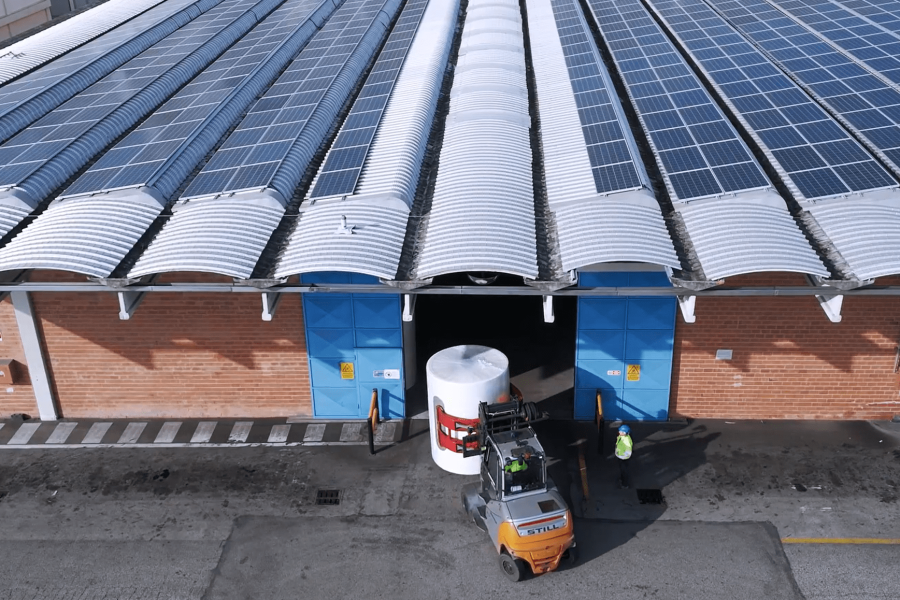
The glass industry operates under conditions that increase risk exposure compared to other manufacturing sectors. Large glass sheets are not only difficult to handle, but they also introduce significant visibility and vehicle control constraints. On top of this, industrial layouts are often suboptimal, with shared lanes, intersections, and areas of limited sight.
The most critical phases typically occur during internal handling, loading and unloading operations, and crossings of mixed-use areas. It is no coincidence that accident analyses show a significant portion of incidents in logistics and production is linked to forklift use and the co-presence of vehicles and pedestrians in the same operational spaces (Testo unico sicurezza).
In these situations, the risk of collision does not depend solely on the distance between a pedestrian and a vehicle, but on a combination of dynamic factors: speed, trajectory, reaction times, and obstacles.
It is precisely this dynamic nature of risk that makes a purely signage- or barrier-based approach insufficient.
The Limits of Traditional Prevention
Conventional safety measures remain essential but show evident limitations in complex operational contexts. Signage and barriers work well in static conditions, but in real workflows, risk is continuously evolving.
A pedestrian may be in a safe zone one moment and exposed the next; similarly, a forklift may travel safely or suddenly find itself ina critical situation due to a change in trajectory or visibility. In this scenario, proximity-based systems alone tend to generate a high number of non-relevant alarms.
The result is well-known: operator desensitization, reduced trust in the system, and over time, a loss of overall preventive effectiveness. In the glass sector, where operational continuity is essential, this aspect becomes particularly critical.
From Proximity to Risk Detection
An effective paradigm shift involves moving from a distance-based logic to one based on the assessment of actual risk. Not all interactions are dangerous, and treating them as such inevitably leads to inefficiencies.
An advanced approach considers parameters such as relative speed, direction, and trajectory to estimate the real probability of collision. This enables interventions that are proportionate to the level of risk, improving both safety and operational flow.
In environments like those in the glass industry, this distinction is essential: reducing false alarms not only enhances perceived safety but also preserves operator attention for genuinely critical signals.
AME’s experience in the glass industry
It is precisely in response to these needs that AME, with over 25 years of experience developing solutions to improve safety and efficiency in industrial settings, has built its approach. The company has also developed specific expertise in the glass sector, working directly in plants and confronting complex, constantly evolving operational dynamics.

Solutions have been designed and refined through real-world case studies, aiming to integrate seamlessly into existing workflows without compromising productivity. This hands-on experience has allowed AME to validate an advanced prevention model that goes beyond simple signaling, focusing instead on understanding and managing risk dynamics.
In this context, the introduction of AMESPHERE anti-collision systems has enabled clients in the sector to systematically analyze movement dynamics within plants, allowing them to:
- monitor real-time interactions between operators and vehicles
- identify areas of highest risk exposure
- activate contextual alerts only when actual danger exists
The analysis of collected data has also made it possible to implement targeted interventions in layout and training, producing tangible results in terms of:
- reduction of high-risk interactions
- decrease in unauthorized crossings
- improved workflow efficiency
AMESPHERE: risk-based prevention
AMESPHERE is an integrated digital ecosystem designed for operational safety in complex industrial environments, combining software platforms with tag-based and camera-based technologies to provide a comprehensive, dynamic view of interactions between people and vehicles.
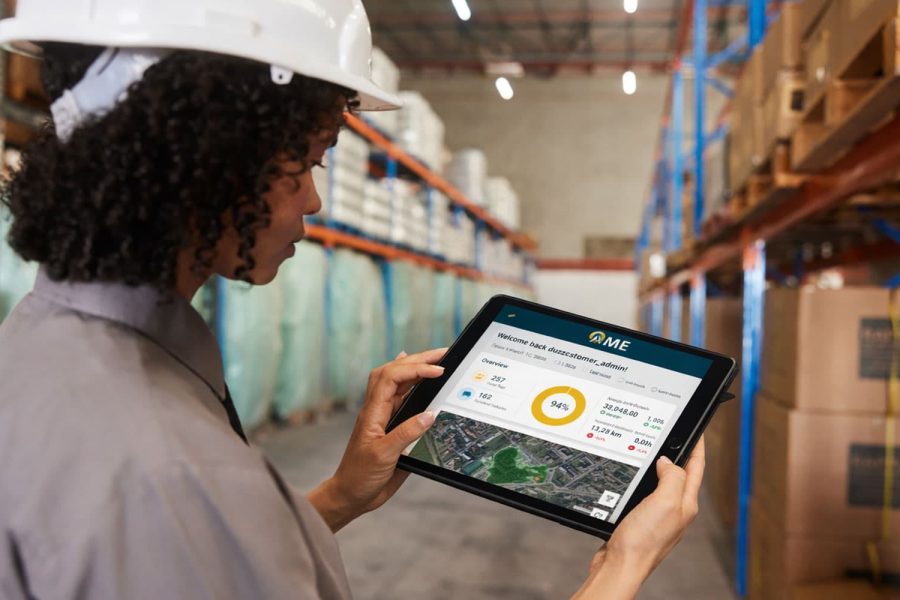
The system uses high-precision LPS sensors to locate operators and vehicles in real-time, integrated with onboard tablets and AI-powered intelligent cameras. This architecture allows observation not only of the presence of elements in the field but, more importantly, of their behavior in space.
The core of the AMESPHERE approach is its ability to measure the level of risk in interactions. Unlike traditional systems that only signal proximity, AMESPHERE processes real-time dynamic parameters—distance, relative speed, trajectory, direction of movement, and operational context—to determine the actual risk of collision.
This allows reliable differentiation between non-critical and potentially hazardous situations, activating alerts only when necessary. Alerts are thus contextual and proportionate to actual risk, and in the most critical cases, the system can directly intervene on the vehicle, for example by modulating its speed, without compromising operational continuity.

From operational data to HSE action
The integration of hardware and software also allows field interactions to be converted into structured data, opening a second level of value: risk analysis over time.
AMESPHERE provides actionable insights to objectively understand where and how risk exposure occurs within a plant. Analyses allow operators to:
- identify the most critical areas
- recognize recurring behavioral patterns
- monitor fleet operational dynamics
- investigate near-miss events
- implement new data-driven safety strategies
This data-driven approach enables the HSE function to move beyond a reactive mindset based on isolated events, adopting a more structured and predictive approach to safety. Reliable data supports decisions regarding layout, flow organization, procedures, and training, improving the overall effectiveness of the prevention system over time.
In this way, technology goes beyond simply generating alarms; it becomes a tool to make risk measurable and manageable, while maintaining a concrete balance between operational safety and efficiency.
Conclusion
In the glass sector, where material fragility and complex operational flows make every interaction potentially critical, safety can no longer rely on chance or static measures. Solutions like AMESPHERE demonstrate that it is possible to move from a reactive, generic-alarm model to an intelligent, measurable prevention system based on actual risk assessment.
Technology thus becomes a true ally for HSE: it allows understanding where and why risk occurs, intervening proportionately, and making informed decisions on layout, procedures, and training. In an ecosystem where operational continuity and operator protection must coexist, this approach transforms safety from a regulatory obligation into a strategic lever for plant efficiency and resilience.
Ultimately, measuring risk means managing it: reducing incidents, optimizing flows, and creating safer, more productive, and sustainable work environments.