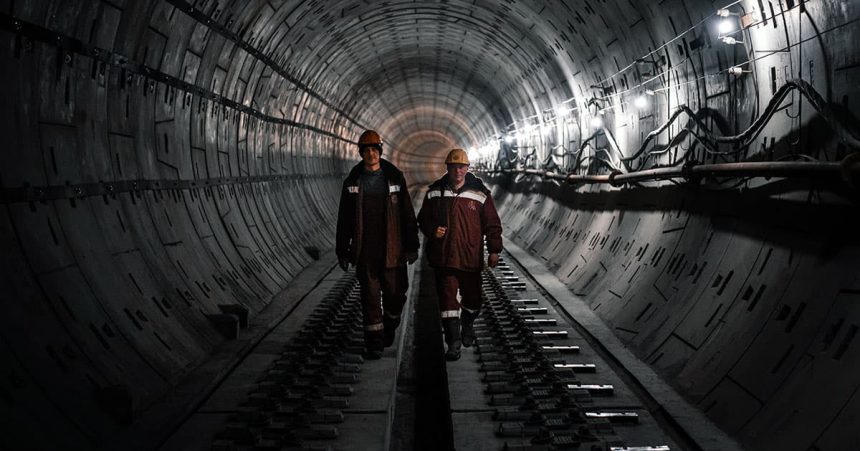
In tunnels, knowing who is present and in which section is not an organisational detail: it is a safety requirement. Spaces are confined, escape routes are limited and communication with the outside is difficult. In an emergency, the first information needed is how many people are inside and where they are located. To provide reliable information, a robust technology is required, capable of operating underground and automatically identifying personnel. This is the role of RFID technology.
RFID is currently one of the most suitable technologies for personnel tracking in tunnels, as it combines reliability in challenging environments with ease of use, without requiring complex infrastructure or any action by the operator.
What is RFID technology
RFID stands for Radio-Frequency Identification. It is a technology that enables the automatic identification of an element through a tag that communicates via radio frequency with fixed readers.
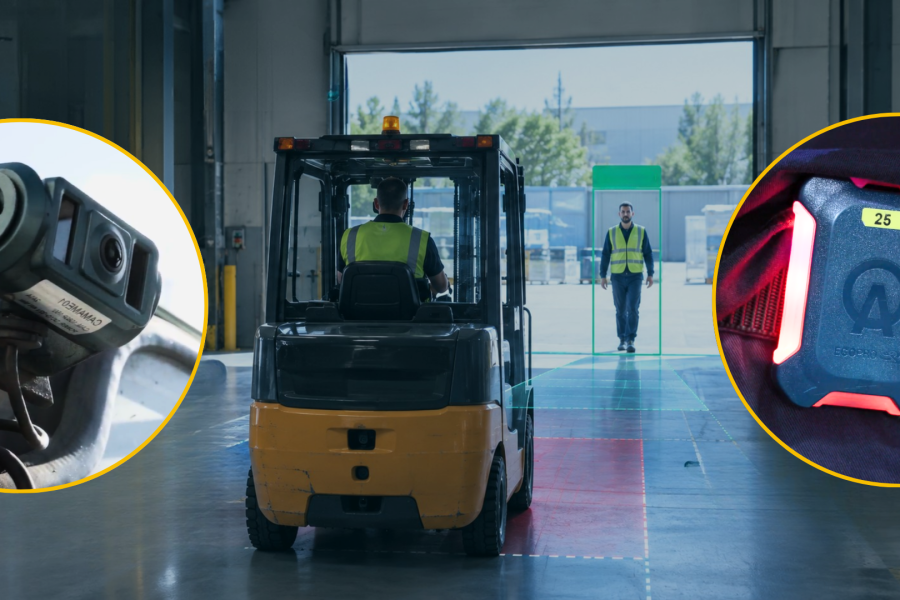
For personnel tracking, each operator wears an RFID tag. Readers and antennas installed along the tunnel detect the tags as they pass through. Unlike optical systems, RFID does not require contact or line of sight: detection occurs automatically when the tag enters the antenna’s range, even in the presence of dust or poor lighting conditions.
Why RFID is suitable for tunnels
The tunnel environment is challenging for many technologies. Dust, humidity, lack of natural light and the configuration of confined spaces can limit systems that rely on visibility or complex networks. RFID, on the other hand, offers several concrete advantages:
- Reliability: it operates reliably in harsh environments where optical systems lose effectiveness.
- Automation: detection does not depend on any action by the operator, who only needs to wear the tag.
- Identification reliability: each tag is associated with a specific person, meaning the data is not anonymous but linked to the individual actually present in that location.
- Ease of management: tags are cost-effective and do not require specific maintenance.
These characteristics make RFID particularly suitable in environments where it is essential to know with certainty who has entered, who has exited and who is present in a specific tunnel section.
Personnel tracking and section monitoring
With RFID, personnel tracking is based on zone presence detection. By positioning readers at the entry points of the different tunnel sections, the system records operator movements in real time and identifies who is present in each section of the tunnel.
This data has immediate operational value. It makes it possible to verify that the number of people present matches expectations, control access to the most critical areas and reconstruct movements when required. Personnel tracking in tunnels transforms information that is often managed verbally or on paper into objective, continuously updated data. The same principle enables access control, as each entry is automatically identified and authorised.
Emergency and evacuation management
It is in emergency management that RFID tracking provides its most tangible contribution. When an alarm is triggered, knowing in real time how many people are inside and in which tunnel section makes it possible to coordinate rescue operations, manage evacuation procedures and verify that no one has been left behind.
Presence data is integrated with the alarm systems distributed throughout the tunnel, such as SOS and emergency call stations, and feeds into event management: each alert is associated with a location and managed according to a procedure, avoiding information loss precisely when it matters most.
AME technology and integration with AMESPHERE
AME has developed a proprietary RFID-based technology for personnel tracking in tunnels, designed to meet the specific requirements of underground construction sites. However, the value does not come from detection alone: it comes from how the collected data is used.
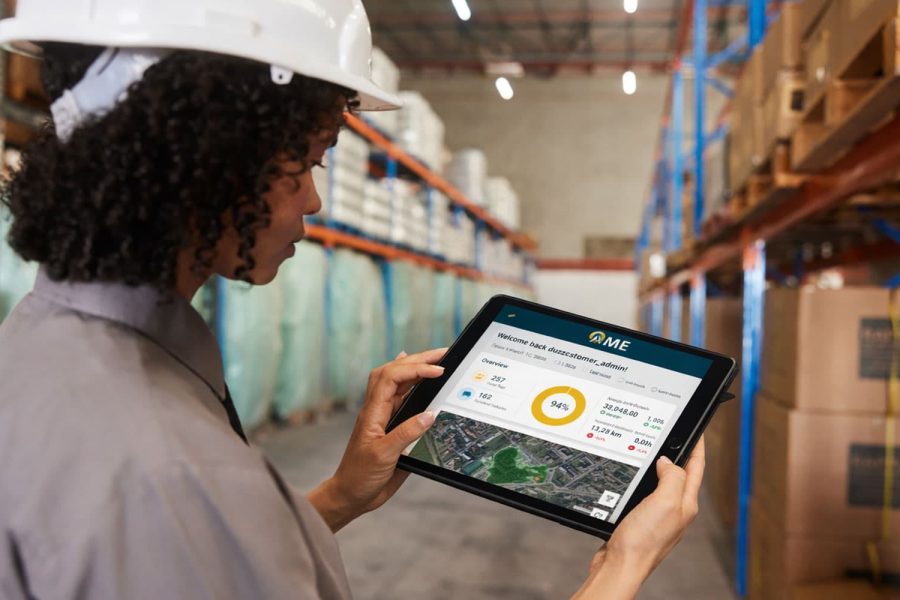
Presence data flows into the AMESPHERE platform, which correlates it with other tunnel safety systems and presents it in an accessible format through dashboards and reports. In this way, RFID tracking is not an isolated system, but part of a Safety Intelligence framework that supports both real-time and long-term decision-making.
Frequently asked questions
What is RFID technology?
RFID (Radio-Frequency Identification) is a radio-frequency identification technology: a tag worn by the operator communicates via radio with fixed readers, which automatically detect its presence without requiring contact or line of sight.
Why use RFID for personnel tracking in tunnels?
Because it is reliable in harsh environments (dust, humidity and lack of light), operates underground and automatically identifies who enters, exits and is present in each tunnel section, without requiring any action by the operator.
How does RFID help with emergency management?
It provides real-time information on how many people are present and which tunnel section they are in, an essential detail for directing rescue operations, managing evacuation procedures and verifying that no one has been left inside.