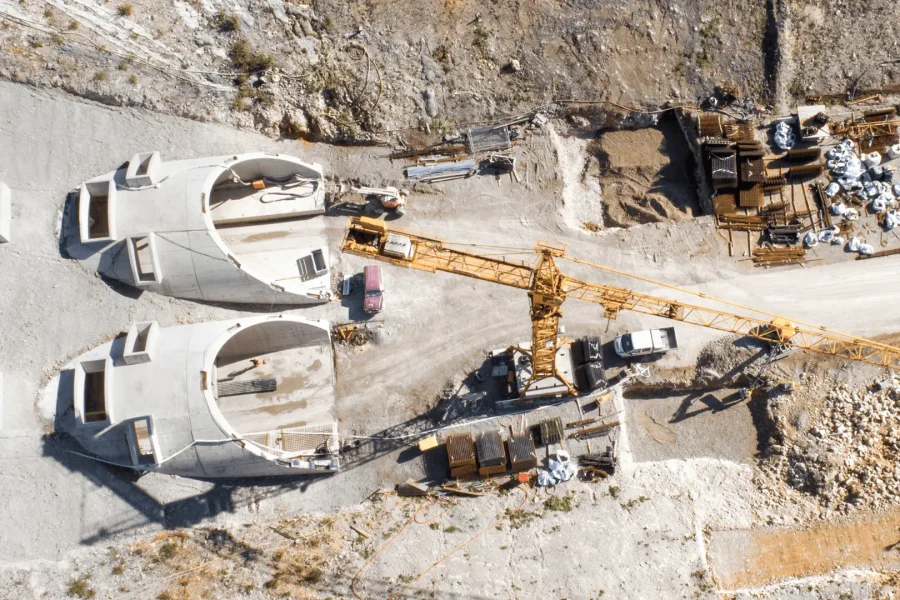
The safety of a construction site does not depend on a single person, but on a system of clearly defined responsibilities. Understanding who does what is the first step towards managing risk effectively, especially in complex settings such as infrastructure works and tunnels, where several companies, construction vehicles and constantly changing work activities coexist.
Alongside the roles established by law, a new element is emerging that strengthens their effectiveness: the availability of objective data on the construction site. Those responsible for safety can now complement their experience with an up-to-date, continuous view of what is happening in the field.
Roles and responsibilities on construction sites
On temporary or mobile construction sites, safety management is governed by Title IV of Italian Legislative Decree 81/2008, which identifies several figures with specific duties.
The client is the party on whose behalf the work is carried out and plays a central role in setting up safety. The employer of each company is responsible for the safety of its own workers. The supervisor oversees the application of procedures in the field. These figures are joined by the safety coordinators, who are required when several companies work on site: a frequent situation, precisely in the most complex works.
Understanding this structure is essential, because safety on a construction site is never the task of a single person, but the result of coordination between different roles.
The safety coordinator
When several companies are expected to be present on a construction site, the law requires safety coordinators to be appointed. The design-phase safety coordinator (CSP) works during the design phase and draws up the Safety and Coordination Plan (PSC); the execution-phase safety coordinator (CSE) works during construction, verifying the application of the planned measures and the coordination between companies.
The role of the CSE is particularly delicate, because it is carried out on the real construction site, where conditions change as work progresses. The CSE’s task is to ensure that the different companies operate in a coordinated way, that interference between work activities is managed and that safety measures remain appropriate as the site evolves. It is a job of continuous verification, which requires up-to-date knowledge of what is happening in the field.
Obligations and coordination between companies
The simultaneous presence of several companies is one of the main sources of risk on construction sites. Interference between work activities, shared spaces and the movement of vehicles and personnel from different companies require constant coordination. An often underestimated aspect concerns the safety of workers from external companies and visitors, as well as drivers who access the site occasionally: they are less familiar with the environment and its rules, and this increases the risk.
For this reason, access control and attendance management are not just administrative obligations, but safety tools. Knowing who is on site, in which area and with which authorisations makes it possible to enforce procedures and to intervene promptly. Construction site access control makes it possible to authorise and monitor the entry of vehicles, workers and suppliers, ensuring that everyone who enters receives, right from the start, the information they need to move around safely.
The role of data and monitoring
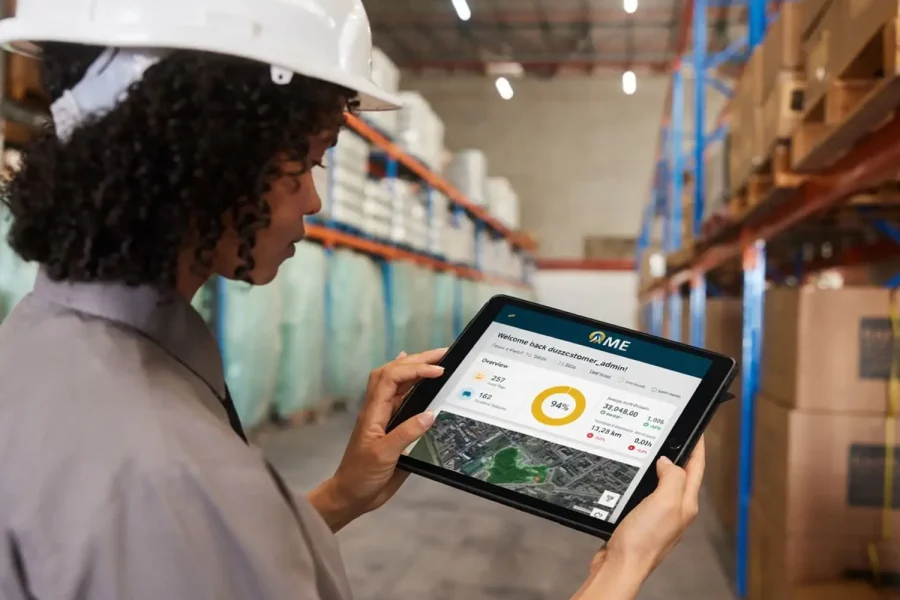
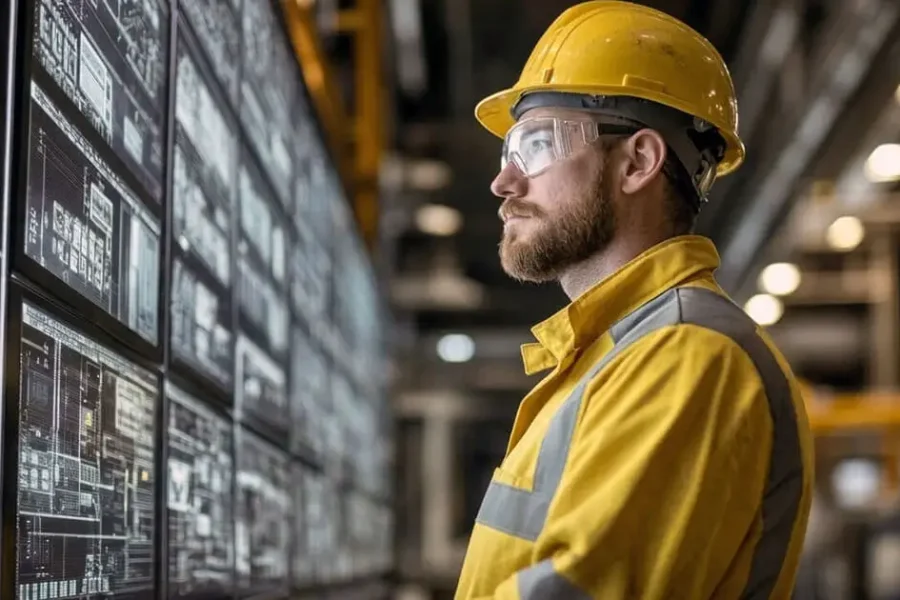
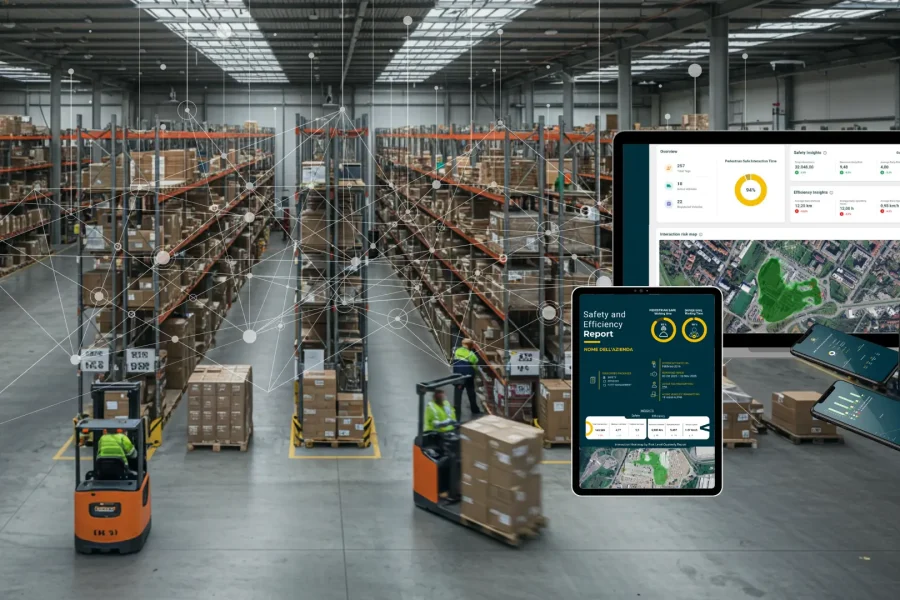
To the figures and obligations established by law, real-time monitoring adds an element that strengthens the entire system: objective data. Those responsible for safety can rely not only on direct observation, but also on continuous, up-to-date information on attendance, flows and interactions between people and vehicles.
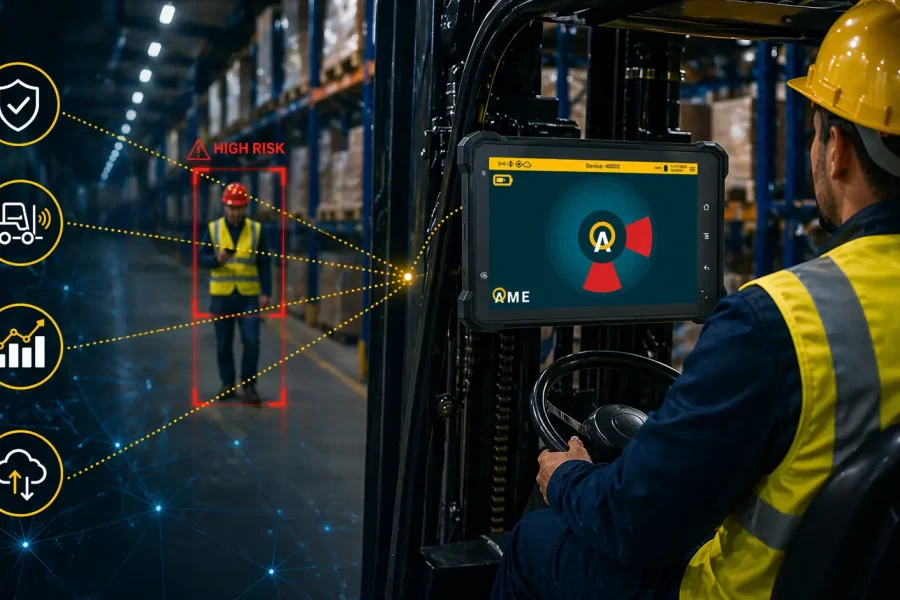
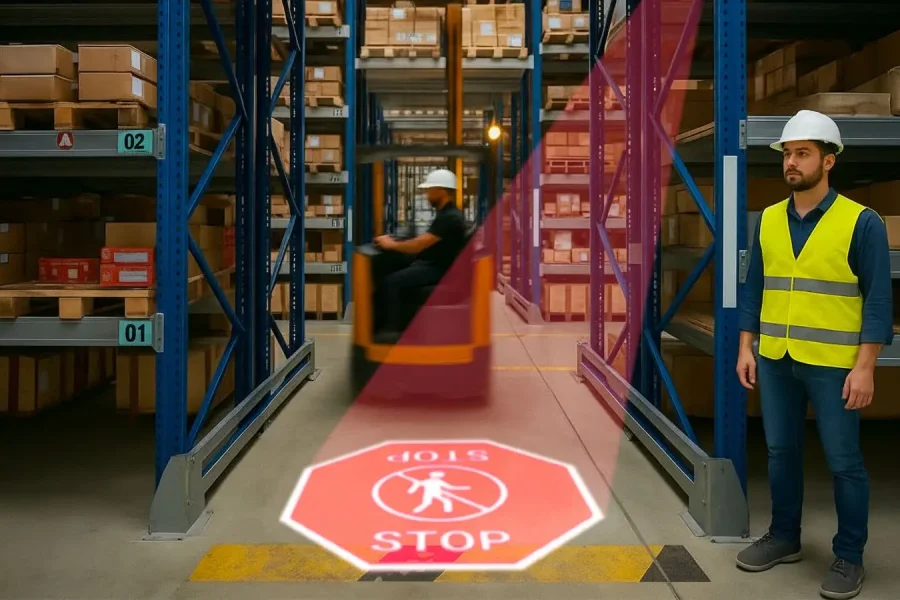
This changes the way people work. Verifying the effectiveness of measures no longer relies only on periodic inspections, but on evidence; decisions on layouts, routes and procedures are based on data rather than perceptions; recurring critical issues emerge before they turn into accidents. A Safety Intelligence platform such as AMESPHERE turns the data collected in the field into concrete indicators that support those who manage safety, also integrating anti-collision safety functions to protect workers and vehicles. The role of the safety manager does not change in substance, but gains an additional tool to carry it out more effectively.
Frequently asked questions
Who is responsible for safety on a construction site?
Safety on a construction site involves several figures established by Italian Legislative Decree 81/2008: the client, the employers of the companies involved, supervisors and, when several companies are working on site, the safety coordinators. It is not the task of a single person, but the result of coordination between different roles.
What is the difference between the CSP and the CSE?
The design-phase safety coordinator (CSP) works during the design phase and draws up the Safety and Coordination Plan (PSC). The execution-phase safety coordinator (CSE) works during construction, verifying the application of the measures and the coordination between companies on the real construction site.
How does data support the safety manager?
Real-time monitoring provides objective information on attendance, flows and interactions between people and vehicles. This makes it possible to verify the effectiveness of measures, make decisions on concrete grounds and identify recurring critical issues before they turn into accidents.