More data does not automatically mean more safety. The real challenge for HSE organizations is to understand the operational context through the information collected in the field, and to turn it into decisions that reduce risk exposure.
In recent years, safety management has taken an important step forward. Behavioral observations, near-miss reports, field sensors and dashboards have made increasingly detailed information available on day-to-day activities. Today, organizations can observe aspects of operational risk that in the past were left mainly to experience, individual perception or checks carried out at specific moments.
Systematic data collection is a fundamental prerequisite for improving safety. But collecting information does not, in itself, mean understanding what it means. An interaction between a pedestrian and a vehicle, a recurring situation in a work area or a change in operational flows are signals that need to be interpreted in light of the conditions in which they occur.
The value of data, therefore, lies not only in what it shows, but in its ability to explain what happens in the field, why it happens and where action can be taken.
Context before behavior: the HOP approach
An important reference for this perspective is Human and Organizational Performance (HOP), an approach to safety that shifts the focus from individual behavior to the organizational and operational conditions in which people work and make decisions. One of the five HOP principles systematized by Todd Conklin states that context drives behavior. This concept is essential to understanding the meaning of the information collected in the field: what a person does also depends on the goals they have to achieve, the resources available, operational constraints and the information they are able to perceive at that moment.
Closely linked to this perspective is the concept of local rationality, part of the systems thinking approach promoted by EUROCONTROL. People act on the basis of what seems reasonable in the situation they are in, given their understanding of events and the priorities of the moment. An obstructed passageway, an intersection with limited visibility, a loading deadline or overlapping pedestrian and vehicle flows can influence operational decisions and help create conditions of greater risk exposure.
For HSE professionals, this means reconstructing the conditions in which an interaction occurred, seeking to understand which features of the system contributed to it. Data thus becomes a tool for understanding work as it is actually done, not just for recording what happened.
Safety-II: understanding risk also means looking at what works
If HOP helps interpret behavior in light of context, Erik Hollnagel’s Safety-II broadens the view to the system as a whole. Alongside the traditional approach (Safety-I), which measures safety by what goes wrong, Safety-II also asks why, in most cases, activities are carried out without consequences despite variable operating conditions. The two perspectives are not mutually exclusive: analyzing incidents remains essential, but understanding how and why activities normally run without negative consequences provides a more complete view of the system.
In industrial and intralogistics operations, most interactions between people and vehicles take place without incident. These interactions are a fundamental part of the operational context: they help to understand usual flows, the conditions in which work proceeds smoothly and the characteristics of the situations that, by contrast, are critical. Observing these dynamics as well makes it possible to compare what happens most frequently with situations involving higher risk exposure. From this perspective, context is not a background to be added to data: it is what gives data its meaning.
From data to understanding risk
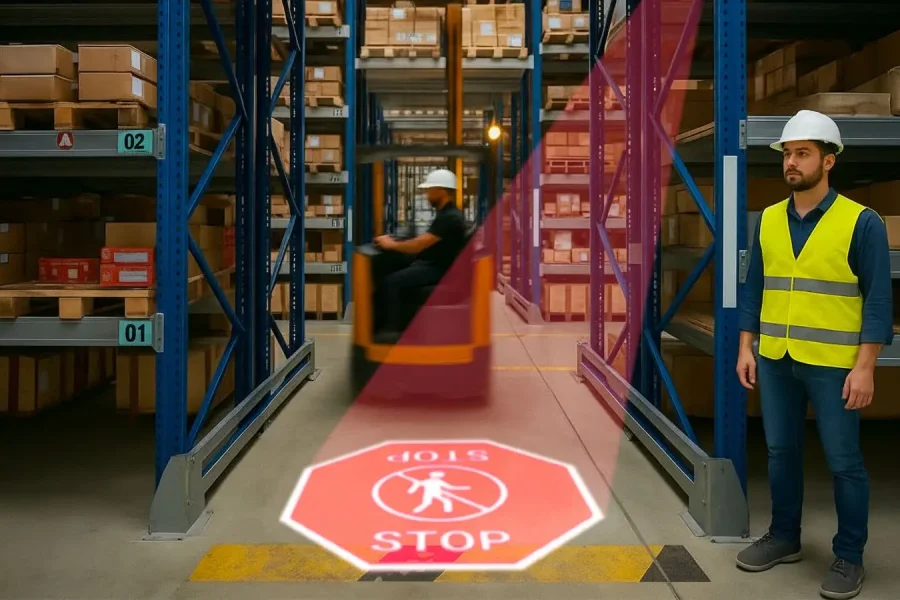
Applying these principles to HSE management means going beyond simply detecting an event and considering the information that describes it. An interaction between a pedestrian and a forklift, for example, does not tell the whole story on its own. To understand its relevance, you need to know where it occurred, at what time of day, under what operating conditions and with what dynamics. It is equally important to understand whether it is an isolated episode or a situation that recurs over time.
When this information is analyzed together, elements emerge that a single detection could not reveal: areas where critical interactions are concentrated, time slots with higher exposure, or recurring dynamics that deserve closer investigation. An isolated interaction may call for a check. The repetition of the same dynamic, in the same place or under similar conditions, may instead point to a more structural issue, related for example to layout, visibility, flow organization or the allocation of activities.
This does not mean that recurrence automatically proves a cause. It means that it offers a concrete element to investigate, connecting the evidence collected with knowledge of the process and of working conditions.
This is where data availability turns into analytical capability: not accumulating reports, but recognizing relationships, identifying priorities and directing investigations toward the conditions that deserve the most attention.
From detection to action: the contribution of AMESPHERE
This step is at the heart of the Safety Performance Management cycle of AMESPHERE, designed to guide organizations from data collection to its interpretation and translation into improvement actions.
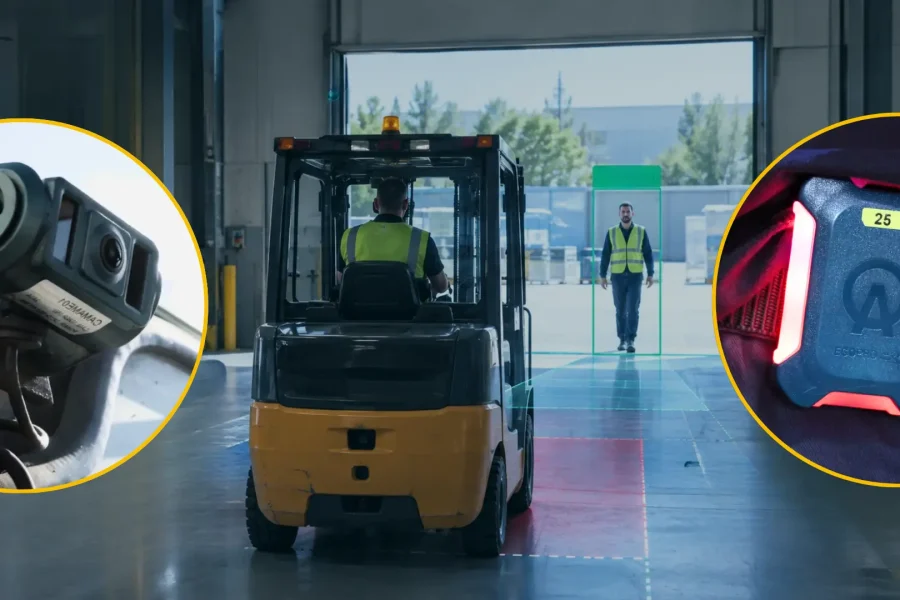
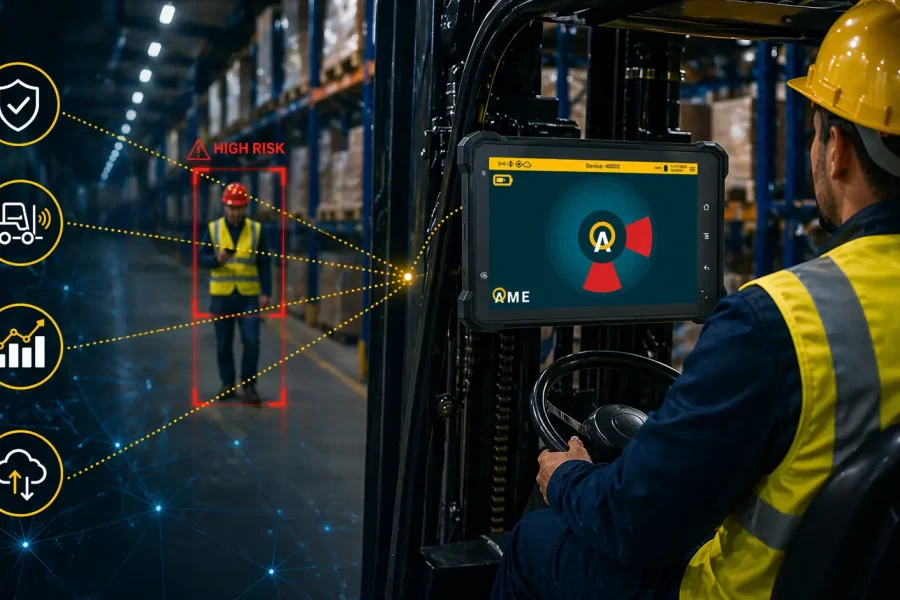
Thanks to LPS technology and the precision of the data collected in the field — distance, relative speed, trajectory, time spent in high-criticality conditions and other configurable parameters — AMESPHERE does more than detect the presence of a person or a vehicle: it provides information on the dynamics of the interaction and on the conditions in which it occurs. This makes it possible to distinguish interactions with high dynamic criticality from unsafe behaviors, which still require attention but may call for different investigations and interventions.
It is this ability to provide context that makes data useful for HSE analysis. Reading dynamics and how often they recur over time makes it possible to identify operational patterns, recognize repeated exposure conditions and identify potential precursors of serious events (SIF precursors) on which to focus investigations. It is not just a matter of knowing that a critical interaction occurred, but of understanding its characteristics and assessing which situations should be prioritized for action.
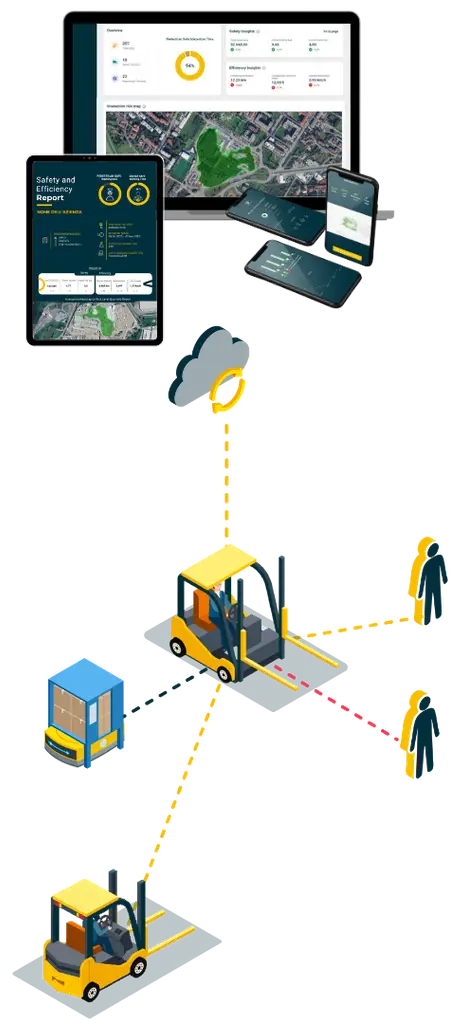
In addition, in line with the Safety-II perspective, AMESPHERE also provides information on the extent to which interactions took place under safe conditions. In this way, signals that require attention can be interpreted within the broader operational picture, without losing sight of the ordinary dynamics that characterize everyday work.
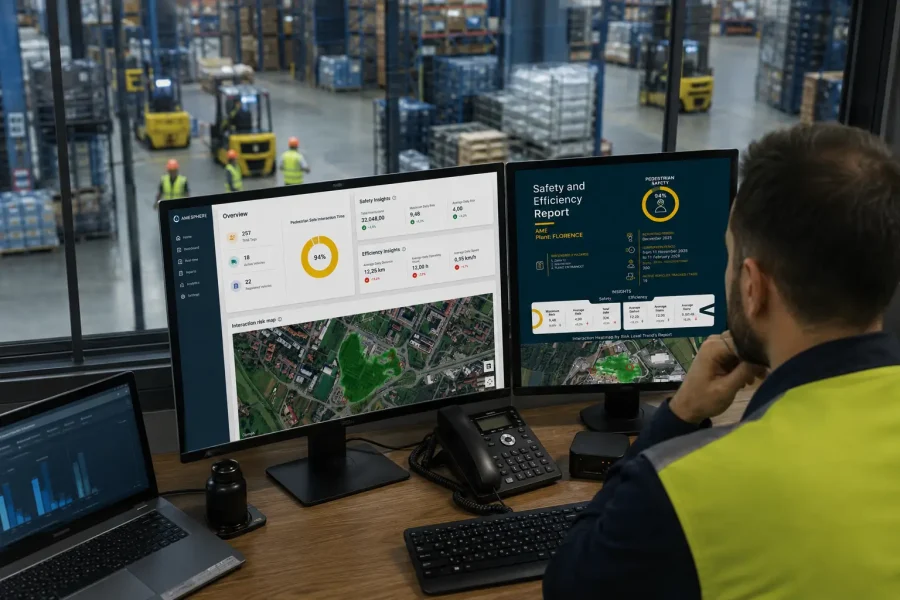
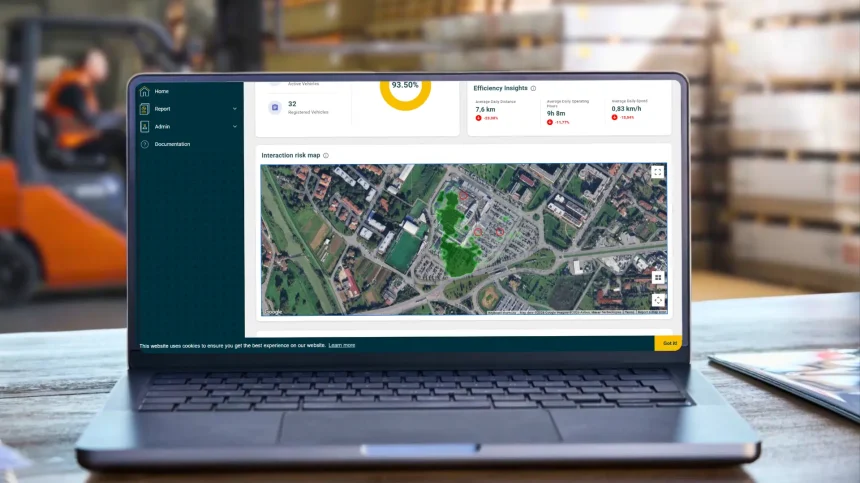
The value of the system, therefore, is not to flag every interaction indiscriminately, but to precisely bring out those that require closer investigation, organizing information into intuitive dashboards, reports and charts to support HSE Managers and Operations teams. These tools make data easier to read, help identify the areas and dynamics that need action, and support the prioritization of corrective actions according to the criticality detected.
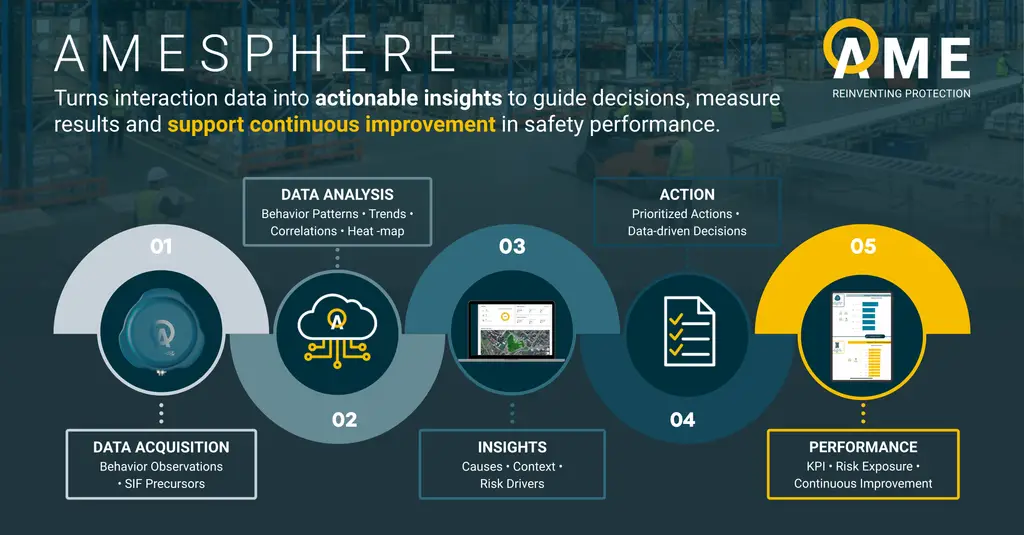
The cycle is completed by measuring and monitoring performance over time, to verify whether the actions taken have actually helped reduce risk exposure. Data thus becomes part of a continuous process: from understanding context to decision-making, through to verifying results. The goal is not to produce more information, but to enable organizations to understand where to act, with what priority and with what results.
Conclusion
For HSE organizations, the challenge is no longer just having safety data, but being able to interpret it in a way that leads to a better understanding of the conditions in which work is carried out.
HOP reminds us that behavior must be read within its operational context. Safety-II encourages us to look at how the system works as a whole, considering both critical issues and the conditions that allow activities to run smoothly. Data analysis makes these perspectives applicable to everyday reality, helping to identify recurrences, investigate possible causes and recognize where an intervention can make a difference.
This is the shift from a safety approach that records events to safety management that uses evidence to drive continuous improvement. Because data, on its own, describes a situation. It is understanding the context that turns it into a decision. And it is decisions, when translated into effective interventions, that contribute to a tangible reduction in risk exposure.