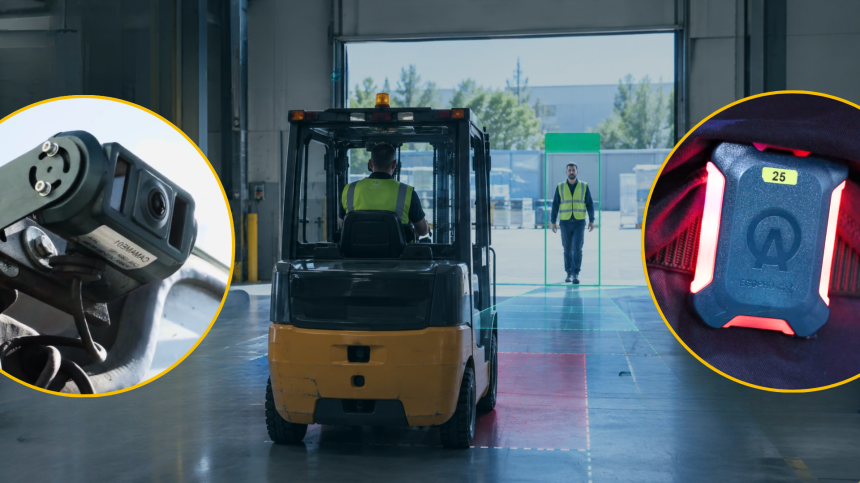
In collision avoidance, protection starts above all with detecting that a person is present, understanding where they are in relation to the vehicle, and determining whether they are in a potentially dangerous situation. The more accurately a system can detect a person and understand the dynamics of their interaction with the vehicle, the more information is available to assess the level of risk and, when necessary, activate a proportionate response, such as slowing the vehicle.
Today, two main technologies are used for this first step in collision avoidance: computer vision through AI Cameras and radio-based detection through TAG devices. Their operating principles are different and, consequently, so are the conditions under which detection can take place.
The difference between the two technologies starts precisely here: what does the system need in order to detect that a person is present? In the case of an AI Camera, the answer lies in vision. In the case of TAG-based technology, it lies in positioning. Understanding this difference is essential to assessing not only what a technology can detect, but also the conditions under which it can do so.
AI Camera: Recognition-Based Detection
AI Cameras use computer vision algorithms to recognize people and other elements present in the scene.
Computer vision, however, has one fundamental requirement: there must be enough visual information available to identify the person. In an industrial or logistics environment, this requirement can become particularly relevant. Pallets, racks, loads, machinery, and structures can create partial or complete occlusions, making a person more difficult to recognize. Some algorithms are specifically trained to handle these situations and can identify a person even when only part of the body, such as the head and shoulders, is visible. Even in these cases, however, recognition is not guaranteed: if this portion is also obscured, or if the person’s configuration is significantly different from those encountered during training, detection reliability may decrease.
This is not a limitation specific to a particular camera or algorithm. It is one of the main challenges addressed by research into pedestrian detection. A 2024 study on occluded pedestrian detection uses the international CityPersons, Caltech, and CrowdHuman benchmarks and specifically highlights how detection system performance remains challenging in situations involving partial or complete occlusion.
Environmental conditions can also have an impact. Research into nighttime pedestrian detection has led to the creation of dedicated datasets such as NightOwls, consisting of approximately 279,000 frames captured at night by researchers at the University of Oxford. The researchers highlight how low light, reflections, blur, contrast variations, and weather conditions make detection more complex than under daytime conditions.
The advantage of this technology is that the person does not need to wear any device. An operator, visitor, external driver, or other person can therefore be detected when they enter the camera’s field of view.
The principle is therefore straightforward: the camera does not require the person to wear any device, but it can detect them when sufficient visual information is available for recognition.
TAG: Detecting Where the Eye Cannot See
The operation of a TAG-based collision avoidance system is different. The system does not need to visually identify the person in order to detect their presence: the TAG communicates with the positioning infrastructure and makes it possible to determine the person’s position in relation to the vehicle.
This introduces an important advantage: detection does not depend on the person’s visibility. An operator equipped with a TAG can therefore be accurately detected even behind a rack, pallet, load, or other structure, as well as under non-optimal lighting conditions.
There is, however, one fundamental requirement: the person must be wearing the TAG.
Two Technologies, Two Detection Conditions
AI Camera and TAG-based technology have different detection conditions.
- AI Camera: detection depends on the availability of sufficient visual information to recognize the person. This is an intrinsic condition of the technology and therefore a technological limitation that is difficult to overcome. The person must be within the camera’s field of view and sufficiently recognizable for the algorithm to identify them. Computer vision algorithms and machine learning techniques can improve the system’s ability to handle more complex situations and adapt to different scene configurations, but they cannot completely eliminate the intrinsic constraints of visual detection: when the information required for recognition is unavailable or insufficient, detection capability may decrease.
- TAG: the fundamental requirement, on the other hand, is the presence of the device. If a person is not wearing a TAG, they cannot be detected through the radio-based system. In this case, therefore, the condition required for detection does not concern the technology’s ability to detect the person, but rather the availability of the device. This is a procedural and organizational aspect, and it can be managed through access procedures, policies for visitors and external personnel, and, above all, by integrating the TAG into the site’s everyday processes.
Another difference concerns the type and level of detail of the data that the two technologies can provide for analysis. In the case of an AI Camera, the data is primarily associated with the camera being triggered following the recognition of a person. TAG-based positioning, on the other hand, provides more detailed information about the person’s position and the dynamics of their interaction with the vehicle, offering a richer information base for analyzing risk situations.
Considering all these aspects together, it is therefore possible to state that TAG-based technology provides a more solid foundation for collision avoidance applications, thanks to its ability to detect a person regardless of visibility, a usage requirement that can be managed through organizational processes, and the greater richness of the information available for analysis.
This does not, however, mean that AI Camera technology should be excluded as an alternative. On the contrary, its ability to detect people who are not wearing a TAG represents an important complementary function that makes it possible to further extend system coverage.
The Real Strength Is Not Choosing: It Is Integrating
When the two technologies are integrated, the conditions under which a person may go undetected are further reduced. In simplified terms, the main remaining uncovered scenario is one in which a person is not wearing a TAG and, at the same time, is not sufficiently visible to the camera—a situation that is much less common than the conditions that each technology, when used individually, could potentially leave uncovered.
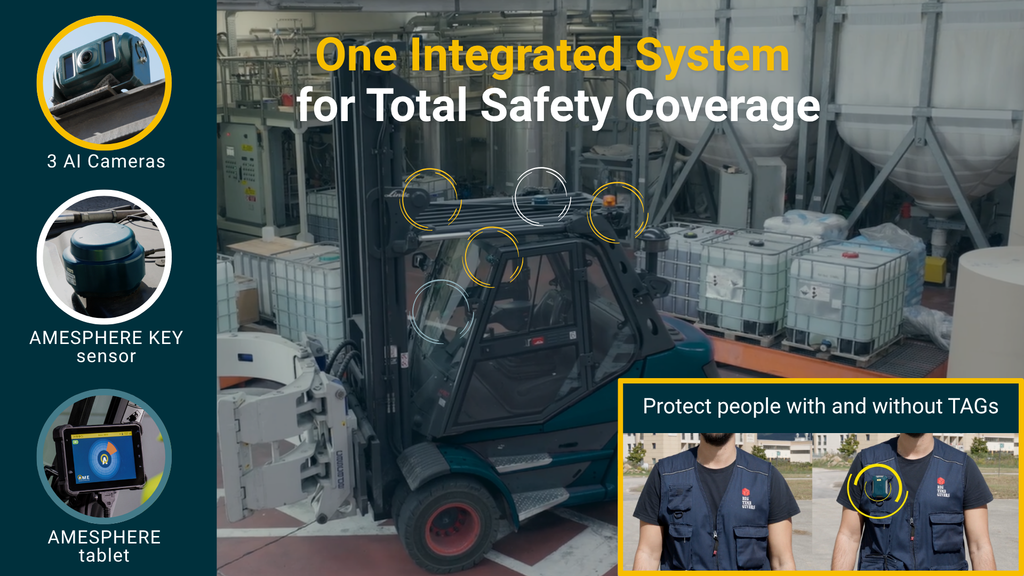
This is the approach behind AMESPHERE: not choosing between two technologies, but integrating them within a single ecosystem, allowing different detection methods to work together.
TAG-based technology represents the core of the collision avoidance solution. Thanks to the precision of LPS (Local Positioning System) technology, AMESPHERE detects the presence and relative position of people in relation to vehicles even when visibility is not guaranteed. The system analyzes the dynamics of the interaction and, when it identifies a risk condition, activates the relevant protection logic, such as alerts and vehicle slowdown. AI Camera technology integrates with this foundation to extend detection to people who are not wearing a TAG, further increasing coverage.
One Interface for Two Technologies
The value of integration does not consist solely in using two technologies simultaneously. In AMESPHERE, TAG and AI Camera are part of the same system and converge on the same onboard interface: a single display.
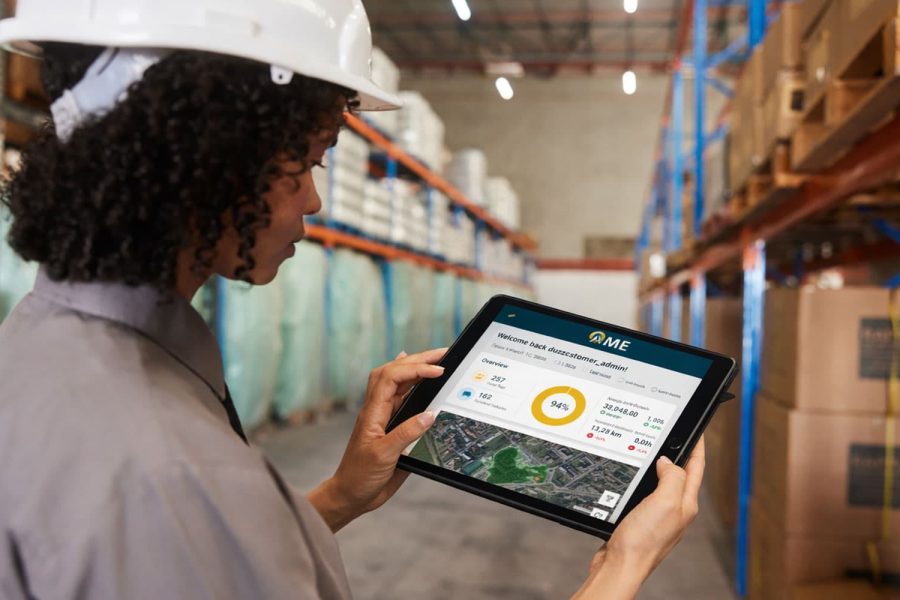
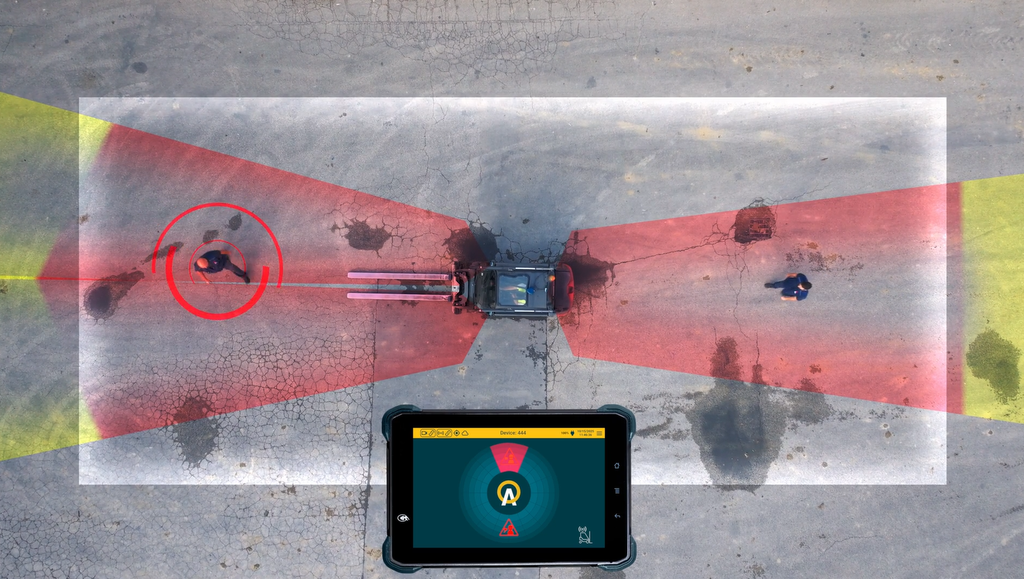
Detected interactions are displayed in real time on the onboard tablet, allowing the driver to receive alerts through a single interface for both operators detected via TAG and people recognized by the AI Camera. The operator therefore does not have to interpret two different systems or switch between interfaces: information from different detection methods is brought together into a single operational view, making it easier to immediately understand the situation around the vehicle.
Integration also concerns how the TAG requirement can be managed within the site. If detection depends on the presence of the device, integrating it into access processes makes its use a natural part of everyday procedures. With AMESPHERE, the TAG can be associated with the badge used to enter the site, thereby becoming part of the access procedure: not a device that people have to remember to pick up and wear, but an element integrated into the process.
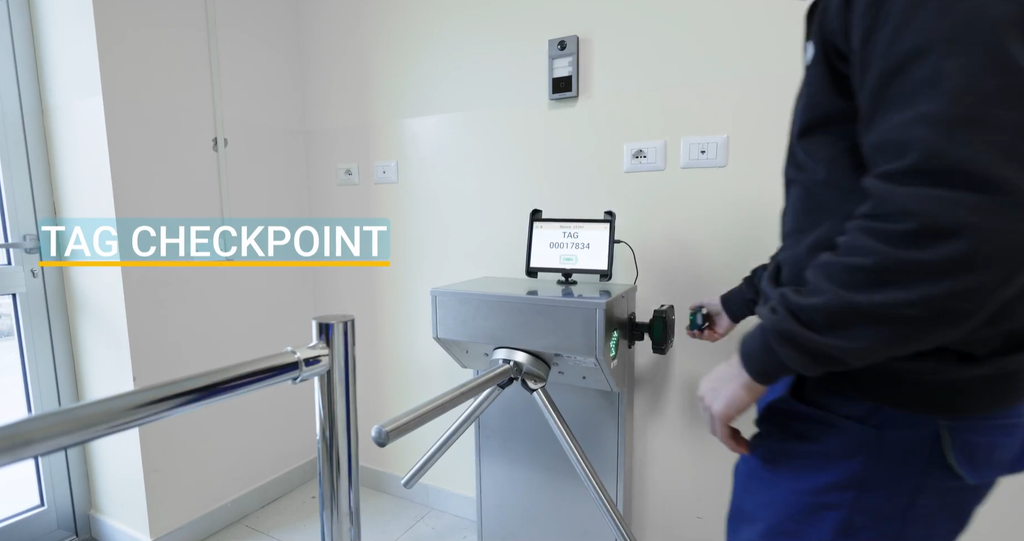
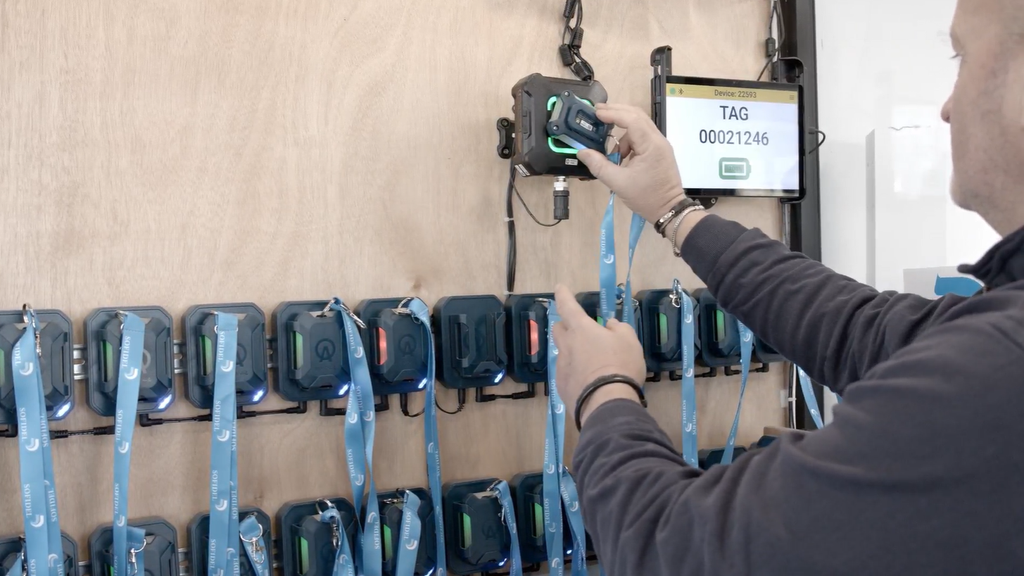
The same principle can be applied to visitors, drivers, and external personnel. Upon entry, the TAG can be associated with the visitor badge, including these individuals in the same detection and protection logic.
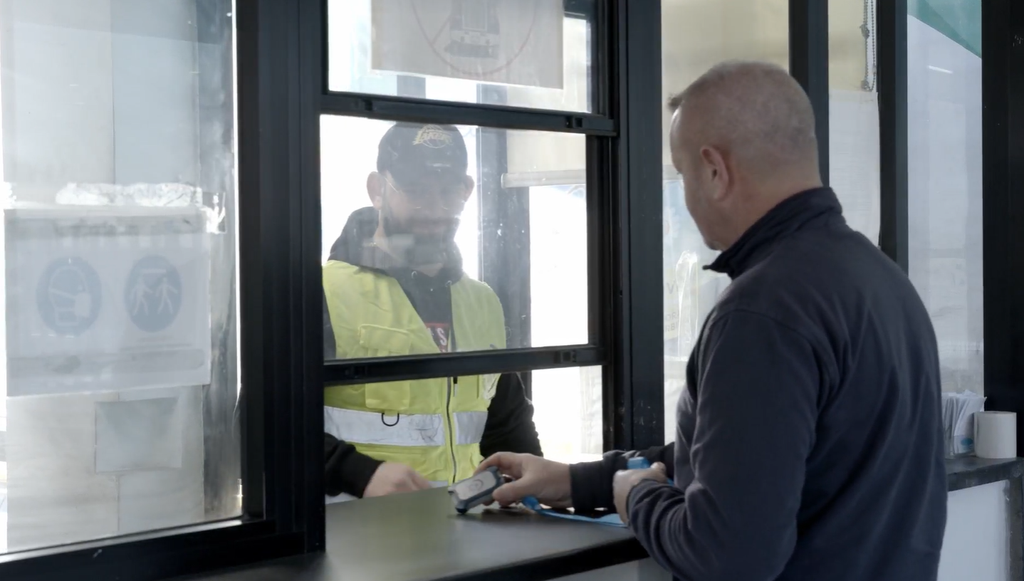
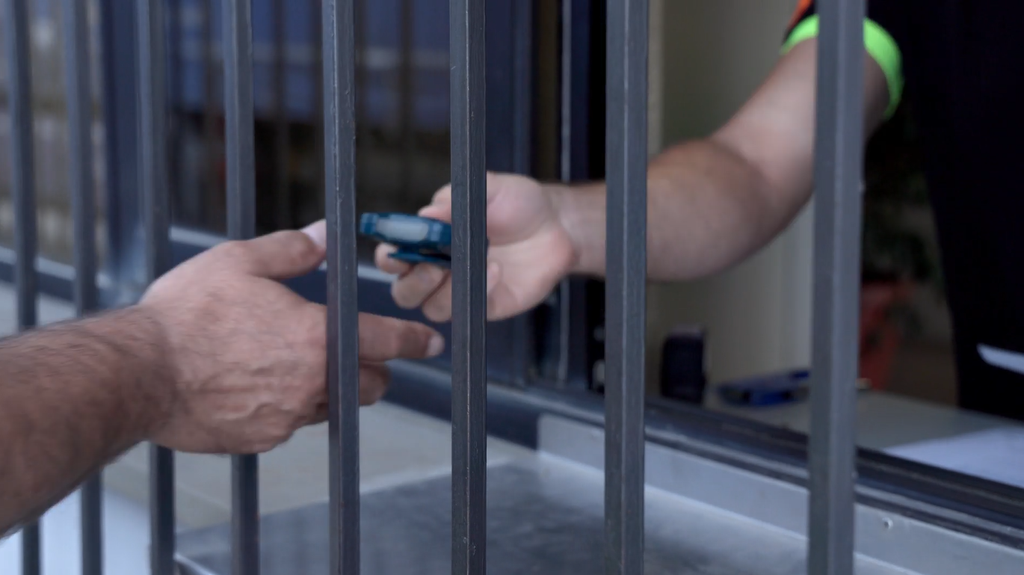
In this way, what might appear to be a limitation of the technology can be addressed by acting on the organizational process that determines its actual coverage.
From Detection to Safety Intelligence: Data Quality Makes the Difference
Real-time detection, however, represents only part of the value of AMESPHERE’s LPS technology. By calculating parameters such as position, distance, relative speed, trajectory, and interaction dynamics, the system collects detailed information on how people and vehicles move and interact within the operational environment.
This makes it possible to go beyond the simple question, “Was there a person?” and also analyze how the interaction developed, where it occurred, and what its dynamics were.
The collection and historical storage of this data make it possible to analyze operational dynamics over time, identifying recurring patterns, areas more exposed to risk, and potential precursors to SIF (Serious Injury & Fatality) events. The information is processed and displayed through dashboards, reports, charts, and KPIs, providing HSE and Operations teams with a structured view of risk dynamics.
The value therefore lies not only in the amount of data collected, but in the quality of the information that LPS technology can provide about interactions between people and vehicles. AMESPHERE processes this data and transforms it into information that can be used to understand risk dynamics over time, identify areas requiring intervention, determine which corrective actions to take, monitor the effectiveness of implemented measures, and drive improvement based on evidence.
Conclusion
Looking at the different conditions under which the two technologies operate, TAG-based technology therefore provides more accurate detection of a person’s presence and position, because LPS-based positioning does not depend on line of sight or on the availability of sufficient visual information. AI Camera technology, on the other hand, adds a complementary capability: recognizing people within the camera’s field of view who are not wearing a TAG.
The objective is therefore not to choose one technology over the other, but to maximize the effectiveness of protection for all operators and create a protection system capable of responding to the different conditions that may occur in the operational environment. Because in collision avoidance, detecting a person as accurately as possible is the first step toward activating the necessary protection when it is needed.
Download the article: