
Construction site safety is undergoing a profound transformation, moving from a reactive approach based on regulatory compliance to a strategic model of proactive operational risk management. On building sites and, in particular, in tunnels and underground works — where the complexity of operations is high and the coexistence of plant, machinery and workers on foot is constant — the traditional “after the fact” safety paradigm shows clear limitations. The convergence of site digitalisation, IoT and data analysis is redefining how risks are identified, assessed and mitigated, opening up new possibilities for accident prevention and for continuity of works.
From Compliance to Proactive Construction Site Safety Management
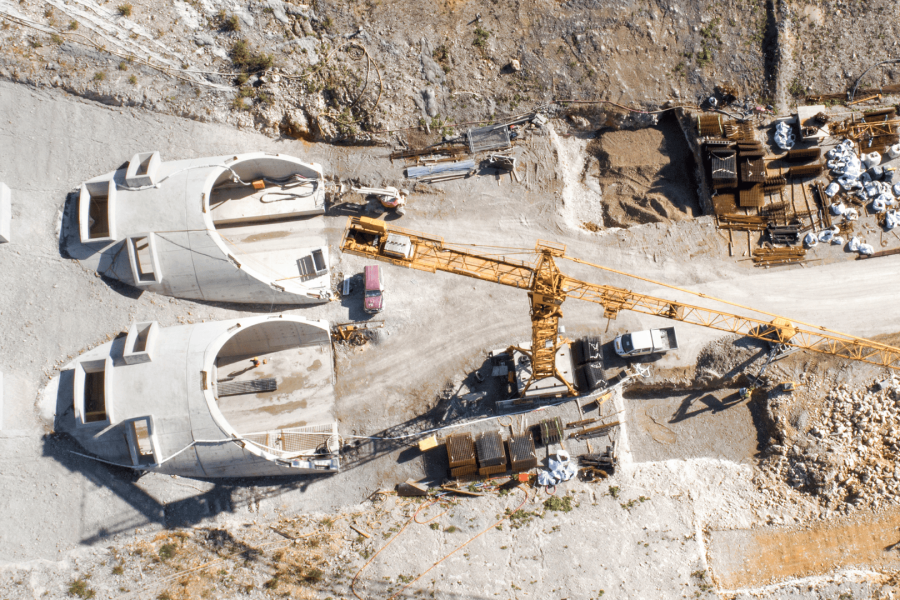
Today’s construction site, especially on infrastructure projects and in tunnels, presents increasingly complex operational scenarios: excavation faces, the movement of plant and machinery, the progression of works and the constant presence of personnel in spaces that are often confined and constantly changing. This operational density generates dynamic risks that change from hour to hour, making traditional approaches based on periodic checks and static procedures insufficient. The shift towards proactive risk management stems from the need to anticipate problems rather than simply manage their consequences. While traditional models focus on post-accident response and verification of regulatory compliance, the proactive approach combines continuous monitoring, data analysis and preventive intervention to reduce risk exposure before it manifests itself in critical events.
Context and Operational Challenges on Site and in Tunnels
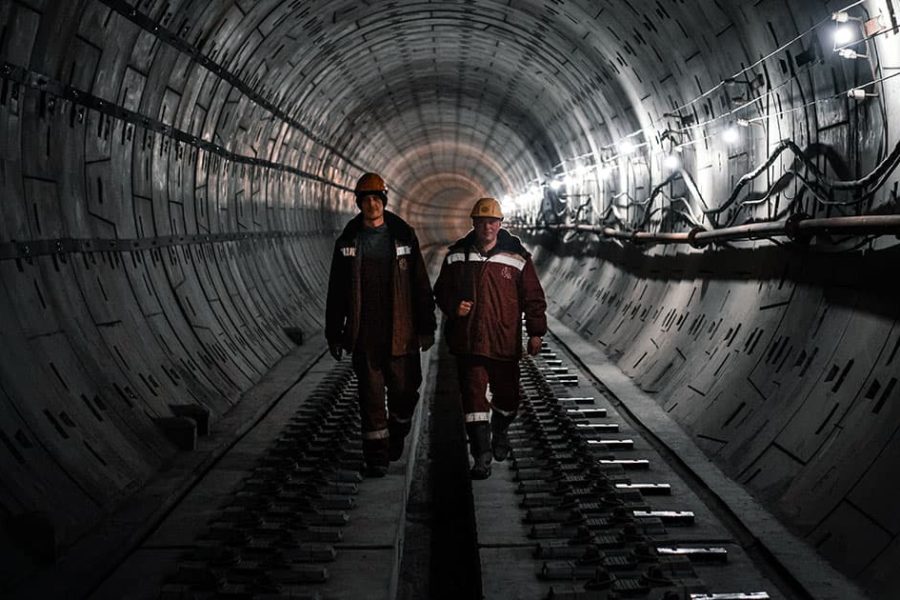
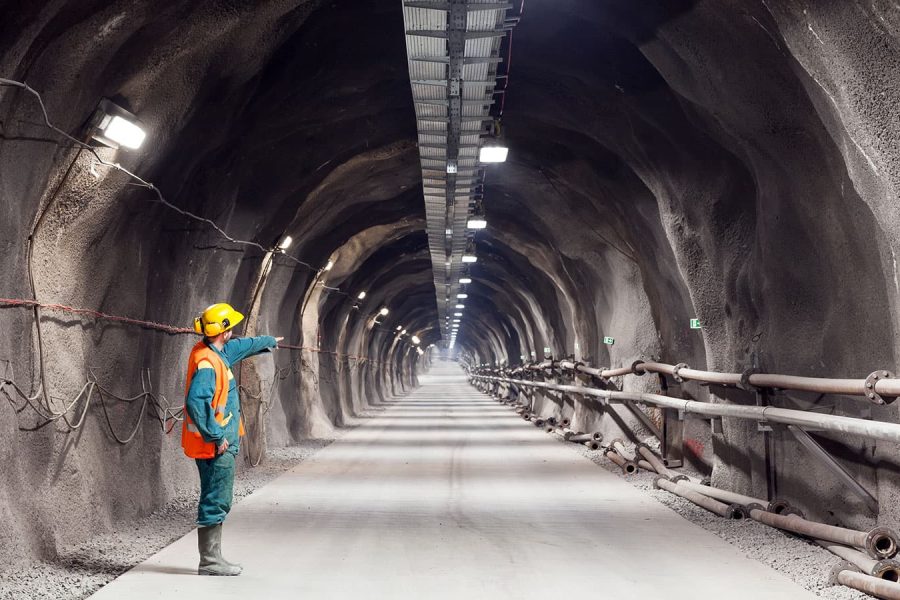
Construction environments — and tunnels to an even greater extent — amplify the complexity of safety management. The coexistence of plant and machinery (excavators, loaders, dumpers, concrete mixers and excavation and advance equipment) with workers on foot creates continuous interactions between moving elements, each with different trajectories, speeds and fields of vision. Underground, the situation becomes even more complicated: reduced visibility, dust, artificial lighting, noise and confined spaces all make risk control more difficult. Handling bulky loads, reversing manoeuvres and managing high-density work faces are daily challenges that demand constant attention. A particularly critical aspect is near misses — events that cause no harm but reveal potential risk situations. In practice, many go unnoticed or are underestimated, wasting valuable prevention opportunities. In this context, preventing collisions between operating machinery becomes a concrete and measurable priority.
Limits of Traditional Approaches: Why Reacting Is No Longer Enough
Traditional construction site safety models rely primarily on periodic checks, staff training and post-accident analysis. While this approach retains its validity for compliance purposes, it has significant limitations when it comes to dynamic operational risk management. Fragmented management is one of the main weaknesses: isolated systems, non-integrated procedures and a lack of overall visibility across work faces create blind spots in risk control. Without a unified platform linking the various safety elements, it becomes difficult to obtain an overall view of critical interactions and to identify hazardous situations in good time. The absence of real-time monitoring limits the capacity for preventive intervention: periodic checks provide static snapshots of situations that change continuously on site, while manual data collection introduces delays and errors into risk assessment. The lack of objective data is a further limitation, because assessments based on individual perception can underestimate or overestimate actual risks, leading to sub-optimal decisions in the allocation of resources.
Accidents and occupational illnesses cost the European economy more than 3.3% of GDP every year — a figure that highlights why a purely reactive approach to safety is not sustainable in the long term. (Source: EU-OSHA)
The Proactive Approach to Construction Site Safety: Monitoring and Prevention
Proactive risk management on site rests on three pillars: continuous operational visibility, data analysis and preventive intervention. This model transforms safety from a control function into a process integrated within day-to-day operations. Intelligent monitoring uses IoT sensors and devices to track interactions between workers, machinery and site infrastructure in real time. This continuous visibility makes it possible to recognise behavioural patterns, high-risk areas and unusual situations before they develop into accidents, removing the subjectivity of manual assessment. Analysing the data collected makes it possible to identify correlations between operational variables and risk levels, while preventive measures can be triggered automatically: when the systems detect critical conditions, the hazard can be flagged with visual and audible alarms, or vehicle speed can be reduced.
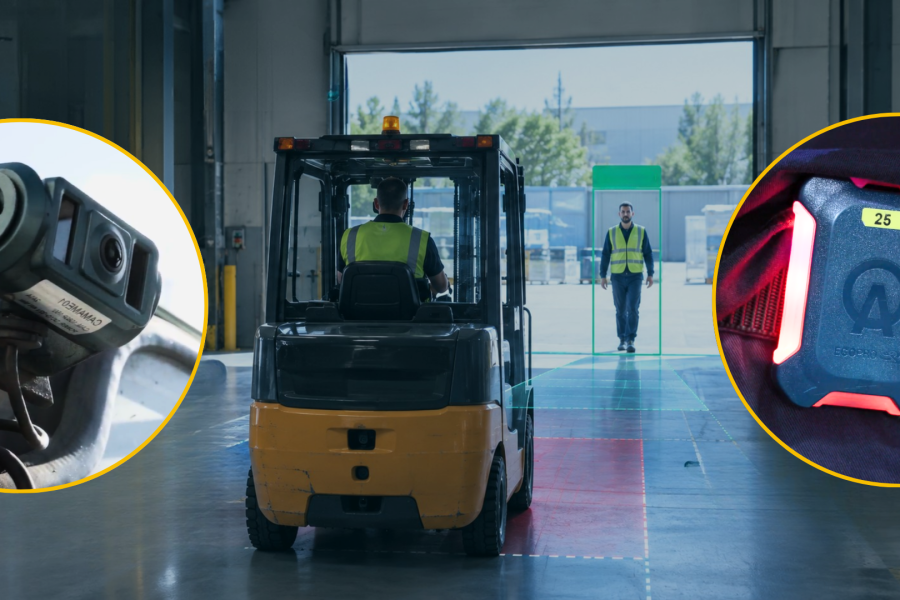
A concrete example concerns collision prevention in tunnels. In a typical scenario, a machine advances along the face while a worker moves on foot in an area of reduced visibility. Proximity sensors and tags worn by workers detect their relative positions; if the distance falls below a safety threshold, the system automatically triggers an alarm on the vehicle and on the worker’s tag, and can command the vehicle to slow down or stop, preventing impact. The same principle enables tracking of workers in tunnels, which is essential for knowing at any moment who is in each section and for managing emergencies and evacuations safely. In the same way, site access control makes it possible to authorise and monitor the entry of vehicles, workers and suppliers, ensuring that everyone entering immediately receives the information they need to move around safely.
Digitalisation and Innovation: Tools for Safety Intelligence
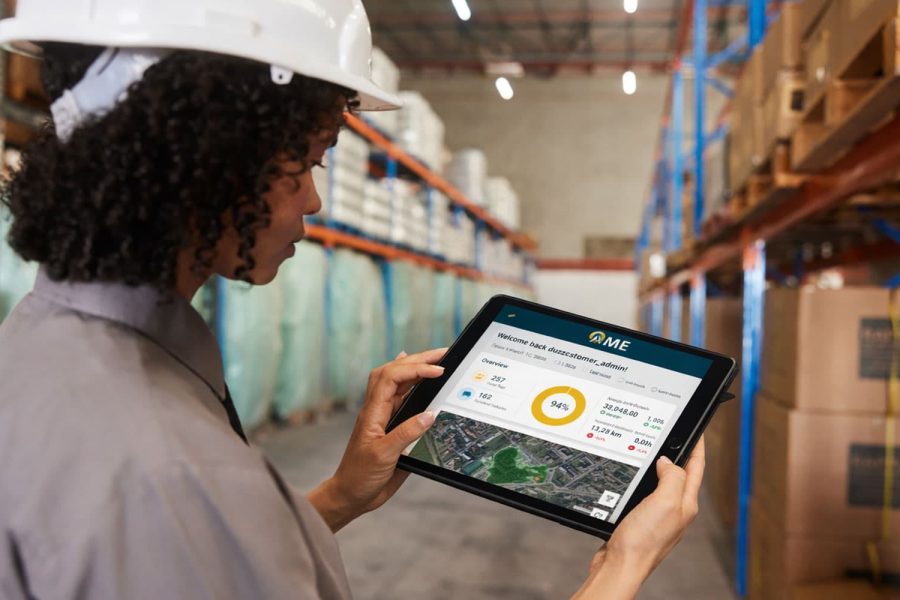
Digital technologies are redefining what is possible in construction site safety management. The Internet of Things (IoT) makes it possible to equip vehicles, workers and infrastructure with communication and monitoring capabilities, creating an intelligent safety network. Advanced detection systems — proximity sensors, positioning technologies and video analytics — do not simply flag the presence of obstacles: they dynamically assess the level of risk on the basis of speed, distance and trajectory, triggering proportionate responses. The value, however, lies not in any single technology but in the ability to integrate data and turn it into useful information. Platforms such as AMESPHERE correlate data from the various systems on site and return it, through dashboards and reports, as objective indicators on critical areas, near misses and the effectiveness of the measures adopted.
Behaviour Based Safety (BBS), traditionally founded on observing worker behaviour, can also evolve from a theoretical approach into a concrete operational system when it is fed by data. Every interaction between workers and vehicles is detected, classified and analysed to identify risky behaviour and areas for improvement, objectively measuring what previously depended on sporadic observation. Safety data analysis is thus transformed into strategic information: dashboards and KPIs provide real-time visibility of risk trends and the effectiveness of preventive measures, making it possible to act where it genuinely matters.
Construction Site Safety as a Strategic Lever
Proactive risk management represents a change of perspective that transforms safety from a compliance cost into a strategic investment. This approach generates value on several fronts: fewer accidents and lower associated costs, greater continuity of works, improved efficiency and a stronger reputation for the company. On construction sites and in tunnels, where a stoppage or an accident can have a significant impact on project timescales and costs, data-based prevention is also a lever for predictability and for governing the works programme.
Various studies confirm the economic return of prevention. According to the Return on Prevention study by the ISSA (International Social Security Association), the average ROI of investment in health and safety is around 2.2:1, thanks to reductions in both direct costs (compensation and medical expenses) and indirect costs (downtime, lost productivity and reputational damage).
Integrating safety and operations overcomes the traditional trade-off between protection and productivity: safer environments are also more efficient and more controllable. Continuous visibility and the capacity for preventive intervention reduce unplanned stoppages and improve the predictability of works, making safety an enabling factor in delivering the project.
Frequently Asked Questions
How can collisions between vehicles and workers be prevented in tunnels?
Prevention starts with separating vehicle and pedestrian routes wherever possible and with clear traffic rules. This foundation is complemented by proximity systems using tags worn by workers and sensors fitted to machinery: when the distance falls below the safety threshold, the system triggers visual and audible alarms and can slow or stop the vehicle. Continuous monitoring also makes it possible to turn near misses into useful data for acting before an accident occurs.
How does proactive management integrate with existing site safety systems?
There is no need to start from scratch. Platforms such as AMESPHERE build on investments already made by integrating with the vehicles and safety systems already present on site. The platform adds real-time monitoring, data collection and analysis, intelligent notifications and automations such as slowing vehicles down in risk situations, with a progressive rollout that improves safety without interrupting works.