In modern industrial environments, managing internal traffic is one of the most significant operational challenges. The complexity of these flows — involving handling equipment, vehicles and pedestrians in frequently shared spaces — generates concrete risks and inefficiencies that can have a direct impact on operational safety and business continuity.
In this context, site traffic control cannot be limited to signage, procedures or up-to-date site plans. Genuinely reducing risk requires understanding how people and vehicles move during normal operations and identifying the situations that create interference before they turn into accidents.
A proactive approach to safety is no longer an option, but a strategic necessity for protecting workers and optimising processes. This is why more and more companies are adopting a data-driven approach: collecting objective information on flows, analysing it and turning it into meaningful indicators makes it possible to support more effective decisions, improve safety and optimise the organisation of space.
Managing Internal Flows for Proactive Safety
The industrial sector deals daily with the need to balance productivity and safety. Inside plants, the movement of heavy vehicles and forklifts alongside pedestrians in the same areas creates an operational complexity that demands meticulous management. This mixing of flows — particularly in production and logistics areas with combined forklift/pedestrian traffic, loading and unloading yards, vehicle gates and company car parks — introduces concrete risks of collisions and pedestrian impacts, with consequent injuries, interruptions to operational continuity and financial losses. The traditional reactive view of safety, focused on after-the-fact mitigation, is evolving towards a proactive approach that combines intelligent monitoring and prevention in order to anticipate hazards and optimise overall efficiency. The goal is not only to reduce the risk of pedestrians being struck by vehicles, but also to ensure efficient flow management, limit congestion, avoid slowdowns in logistics operations and improve the plant’s operational continuity.
Achieving this requires objective information that makes it possible to understand where the critical points are concentrated and how they evolve over time.
Context and Critical Issues: Internal Traffic in Industrial Environments
The dynamics of internal flows in an industrial environment are inherently complex. Anyone working in this sector knows that the greatest risk does not lie solely along the main vehicle route, but above all at “spontaneous” crossing points. These include areas near changing rooms, canteens, car parks and visitor waiting zones, where pedestrian flows overlap with vehicle traffic, especially during shift changes. Congestion at entry/exit peaks and during loading and unloading operations is another significant issue. Bottlenecks are often concentrated at vehicle gates and loading bays, particularly when several carriers arrive at the same time without a slot booking system. This leads to yard saturation, increasing reversing manoeuvres and the risk of accidents.
A recurring problem in industrial environments is interference between handling equipment and pedestrians in transit areas. Managing this risk effectively requires an objective view of the movement of people and vehicles across the site.
Relying exclusively on theoretical assessments or occasional observation can lead to underestimating actual operational dynamics and how workers really behave. By analysing the data collected by the AMESPHERE platform, it becomes possible instead to pinpoint interference points precisely, identify the highest-risk areas and support decisions based on concrete evidence rather than subjective judgement. Heat maps, dashboards and reports make it possible to monitor how risk evolves over time and to verify the effectiveness of the actions taken.
But knowing the risk is only the starting point: thanks to intelligent sensors and its geofencing system, AMESPHERE acts directly on the operating environment, automatically managing pedestrian crossings, traffic lights, transit gates, junctions and low-visibility zones. Depending on the position of vehicles and people, the system can automatically slow vehicles down, change operating profiles or trigger visual and audible warnings, reducing risk without compromising productivity.
In this way safety is not limited to recording events, but becomes a dynamic prevention tool that turns field data into concrete action, simultaneously improving the protection of people, the efficiency of logistics flows and the plant’s overall performance.
Limits of Traditional Approaches to Site Traffic Control
Traditional approaches to site traffic management, while forming an indispensable foundation, often show significant limitations when they are not supported by objective data. Floor and wall signage, the definition of operating procedures or the drafting of the risk assessment document (DVR) are not always enough on their own to guarantee optimal safety levels over time.
In industrial plants, flows change constantly: production layouts are modified, logistics volumes rise or fall, vehicle routes change, and so do the working practices of employees, contractors and external drivers. In this context, even correctly designed signage may no longer reflect the actual organisation of site traffic.
For this reason the traffic plan should not be treated as a static document, but as a tool to be updated periodically and whenever layouts, processes or operational flows change, as required by Italian Legislative Decree 81/2008.
The real challenge, however, is not only keeping the documentation up to date, but verifying that the measures adopted are genuinely effective. Without objective information it is difficult to understand whether procedures are being followed, which areas are most congested or where interference between vehicles and pedestrians occurs most frequently.
It is precisely at this stage that data support becomes decisive. Through dedicated dashboards and reports, platforms such as AMESPHERE make it possible to monitor how flows evolve, identify critical areas and verify the effectiveness of the measures adopted over time, supporting decisions based on concrete evidence rather than casual observation.
The Proactive Approach: Intelligent Monitoring for Operational Safety
The shift towards a proactive approach to safety is built on continuous monitoring of flows and on making the most of the data collected. The aim is to move beyond purely reactive management by intervening before a risk situation turns into an accident.
Having an up-to-date view of the movement of people and vehicles makes it possible to understand how company spaces are actually used, identify anomalies, assess any congestion and check whether internal traffic arrangements still meet the plant’s operational needs.
A key aspect of this approach also concerns access management. Integrating flow monitoring with access control systems ensures that occasional suppliers, hauliers and external drivers receive, from the moment they arrive, everything they need to move safely around the plant. This makes it possible to reduce interference caused by unfamiliarity with the site and to align behaviour with the traffic rules set by the company.
Near misses — events that caused no harm but reveal potential organisational weaknesses — are also a valuable source of information. Analysing these episodes means identifying weak points in the system and acting before they can turn into accidents.
Continuous monitoring also makes it possible to verify the effectiveness of the measures adopted over time, providing objective indicators that help HSE Managers, safety officers and Plant Managers plan improvement actions, measure their results and support decision-making based on hard data.
Digitalisation and Innovation: Applications in Flow Control
Digitalisation and technological innovation offer powerful tools for site traffic control. Technologies such as IoT (Internet of Things) and AIoT (Artificial Intelligence of Things) make it possible to implement advanced sensing and monitoring systems. These tools are not “cutting-edge solutions” for their own sake: they enable advanced monitoring and genuine “safety intelligence”.
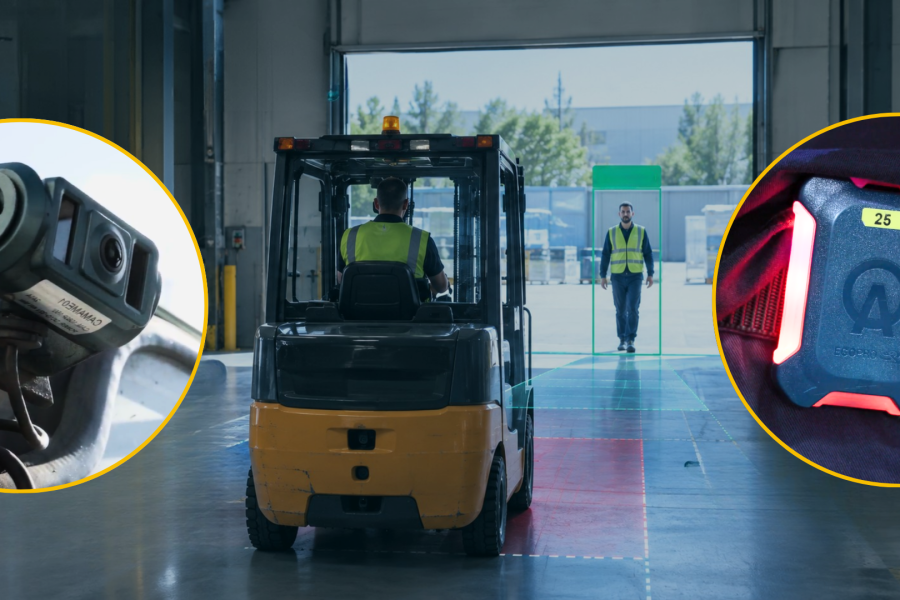
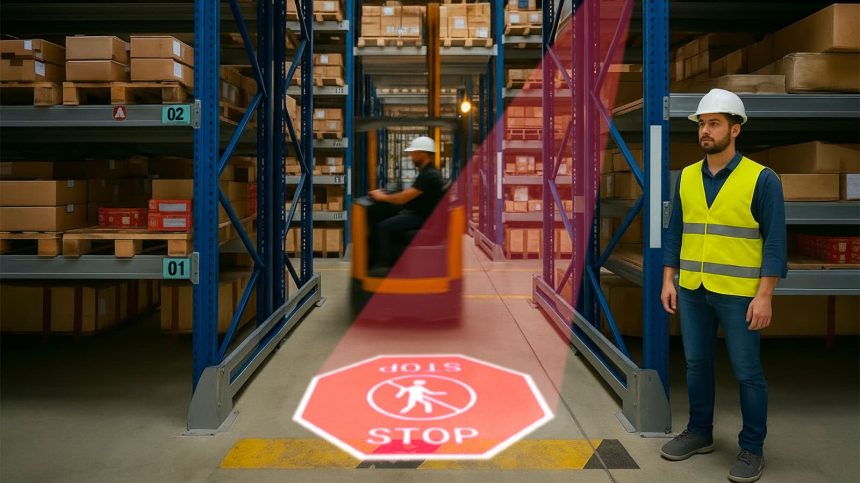
Imagine a scenario in which intelligent sensors, strategically positioned in high-risk areas such as loading bays or junctions with mixed traffic, detect the presence of pedestrians and vehicles in real time. This data is processed by AI algorithms to predict potential collisions and trigger visual or audible alarms, for example through traffic light systems or virtual signage projectors. A practical example might be the use of anti-collision systems on forklifts that brake automatically or warn the driver when pedestrians or other obstacles are nearby.
Advanced access control can also be integrated with internal traffic management software to monitor and manage entry and exit authorisations for vehicles and personnel, particularly in loading and unloading yards, vehicle gates and company car parks. This not only increases safety, but also optimises waiting times and reduces congestion. Managing activities in these critical areas benefits enormously from real-time visibility.
The true value of these tools lies not in any single technology, but in the ability to integrate the data collected and turn it into information that is useful for safety management.
Through analytics platforms such as AMESPHERE, data from the various systems present across the company can be correlated to provide a complete picture of internal flows. Dashboards and reports make it possible to identify the most congested areas, analyse points of interference between pedestrians and vehicles, monitor how flows evolve over time and assess the effectiveness of the measures adopted.
One concrete application concerns access management at production sites. By integrating access control with data on internal mobility, it becomes possible to manage the arrival of employees, contractors, suppliers and external drivers more efficiently, ensuring that from the moment they enter they receive the information and instructions they need to work safely. This helps reduce interference, improve compliance with company procedures and optimise the management of loading and unloading areas, vehicle gates and car parks.
Data integration also makes it possible to monitor the effects of changes made to internal traffic arrangements over time, verifying whether the measures implemented have actually reduced risk situations and improved operational efficiency.
Safety as a Strategic Lever for Operational Efficiency
Internal traffic management, with its complexity and inherent risks, can no longer be regarded as a mere regulatory obligation. Site traffic control becomes genuinely effective when it is supported by objective data, monitoring tools and continuous improvement processes.
Having reliable information on the movement of people and vehicles makes it possible to take better-informed decisions, verify the effectiveness of preventive measures and take targeted action in the most critical areas. This means not only increasing worker safety, but also reducing operational interruptions, optimising logistics processes and improving the plant’s overall efficiency.
In this context, digital solutions such as AMESPHERE support HSE Managers, safety officers and Plant Managers in turning field data into concrete tools for safety governance. Dashboards, KPIs and reports make it possible to monitor how flows evolve, measure the results of interventions and develop traffic management based on objective evidence.
Operational safety thus becomes an integral part of company strategy: a measurable process, continuously evolving and capable of generating value not only in terms of regulatory compliance, but also in efficiency, operational continuity and the protection of people.
Frequently Asked Questions
What is a site traffic plan?
A site traffic plan is a document that sets out the circulation rules for vehicles and pedestrians within a plant or production area. Its purpose is to prevent accidents, optimise flows and ensure workplace safety by defining routes, signage, speed limits and specific operating procedures. This plan is an integral part of the company risk assessment.
When is a site traffic plan mandatory?
A site traffic plan is mandatory whenever the circulation of vehicles and pedestrians within the company poses safety risks, as established by Italian Legislative Decree 81/2008. In particular, it is required in all situations where there is interference between vehicles and workers, especially in production and logistics areas with mixed flows.
How is internal circulation managed within a company?
Internal circulation is managed through a combination of organisational, procedural and technical measures. These include defining dedicated routes, installing appropriate signage, implementing access control systems, training staff and continuously monitoring flows in order to identify and mitigate risks.
How can pedestrians and vehicles be separated within a company?
Separating pedestrians and vehicles is one of the most effective measures for preventing accidents. It can be achieved physically through barriers, fencing or elevated walkways, or functionally through the marking of dedicated lanes, the creation of protected pedestrian crossings and the implementation of alert systems that signal proximity between vehicles.