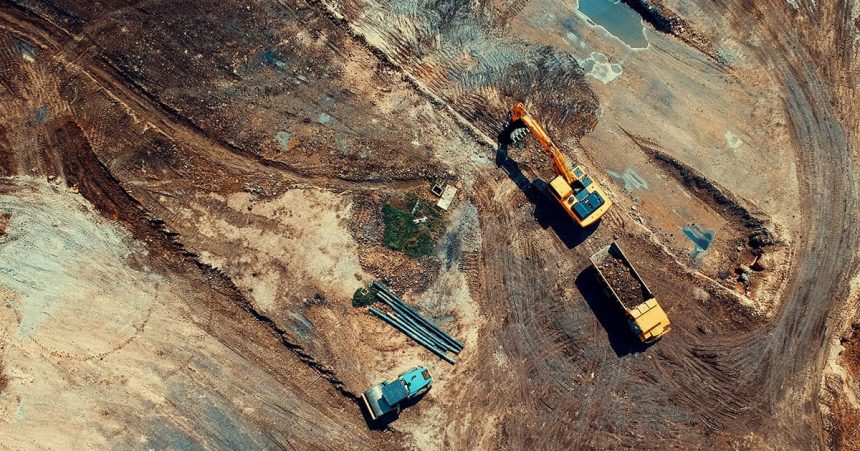
Among the most concrete risks on construction sites and in tunnels are collisions between construction vehicles and workers on foot. Excavators, loaders, dumpers, concrete mixer trucks and drilling equipment operate in confined spaces, often while reversing and under poor visibility conditions. A single blind spot, an obstructive load, a quick manoeuvre or an unexpected crossing can turn a routine situation into a serious accident.
Preventing these collisions is not only a matter of individual attention: it requires a system capable of detecting risks before they occur and intervening in real time. This is the field of active safety applied to vehicle operations.
The risk of collisions in tunnels and on worksites
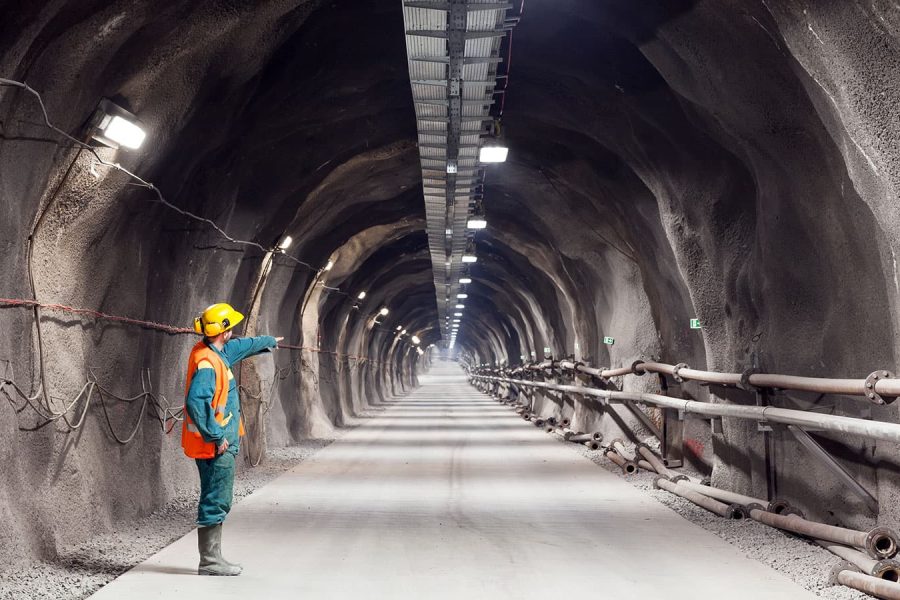
A tunnel excavation face and a construction site operational area share a common characteristic: they are dynamic environments where people and vehicles operate within the same spaces. The visibility of the vehicle operator is limited by the structure of the machine, the load and the surrounding environment; dust and artificial lighting, particularly in underground environments, further worsen the situation.
The consequences of a collision go beyond the direct injury. An accident can lead to work stoppages, potential damage to vehicles and structures, and impacts on project timelines and costs. An often underestimated aspect concerns near misses, events that do not result in damage but highlight recurring risks: when they are not detected, the opportunity to correct a dangerous situation before it escalates is lost.
The limitations of traditional methods
Collision prevention has long relied on organisational and passive measures: separating routes where possible, signage, procedures and driver training. These measures are necessary, but not always sufficient.
Physical separation between vehicles and pedestrians cannot be implemented in every area, especially at the excavation face, where spaces change as work progresses. Signage reflects a planned layout that daily operations continuously modify. Procedures, finally, rely on the constant compliance of everyone involved, including contractors and external drivers who are less familiar with the site. None of these measures act at the exact moment when risk arises: it is precisely that moment that an active prevention system must address.
Active anti-collision systems
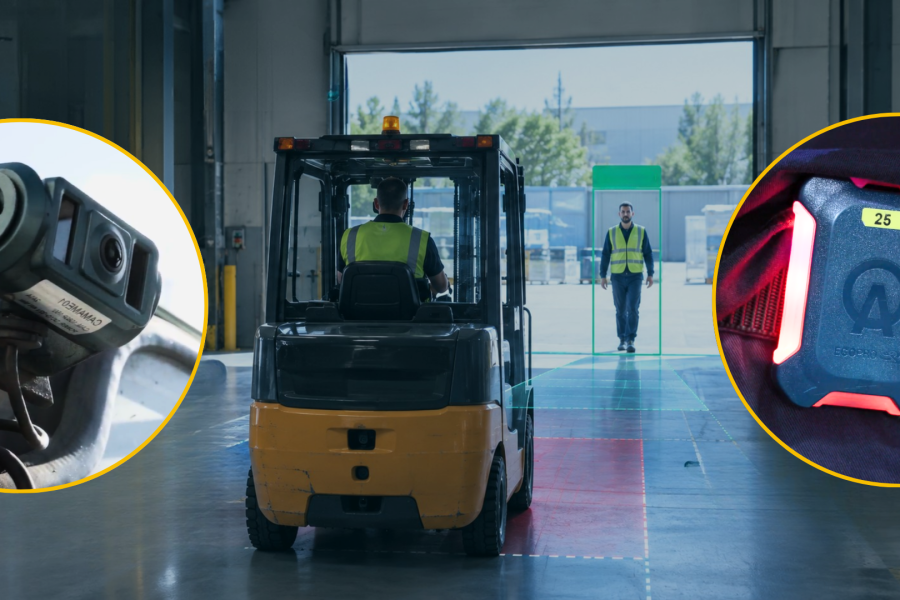
Anti-collision systems intervene where traditional measures reach their limits. Sensors installed on vehicles and tags worn by operators detect their relative positions in real time. When the distance falls below a safety threshold, the system automatically activates a visual and audible alarm, both for the driver and the operator, and can, where required, slow down the vehicle, preventing the collision.
The effectiveness of these systems depends on their ability to operate even where human visibility and optical sensors fail: blind spots, dust and poor lighting conditions. This is why robust technologies are used, such as UWB proximity sensors capable of dynamically assessing risk levels based on distance, speed and trajectories. Collision prevention between operational vehicles thus becomes an active function that reduces reaction times and acts before human error occurs. The same active safety principle applies to industrial environments, from accident prevention involving forklifts and AGVs to collision prevention between overhead cranes.
From individual alerts to data: monitoring and prevention
An anti-collision system does not simply prevent individual collisions: it generates valuable data. Every proximity detection, every near miss and every system intervention provides information that, when collected and analysed, reveals where and when critical interactions occur.
It is the shift from reaction to structured prevention. By correlating this data, it is possible to identify the areas of the worksite or tunnel where risk levels are higher, understand whether the measures implemented are effective and take targeted actions on layout, routes and organisation. Anti-collision safety integrated into a Safety Intelligence platform transforms a protective device into a continuous improvement tool, making prevention measurable over time.
Frequently asked questions
How can collisions between construction vehicles and operators be prevented?
Prevention starts with route separation and clear procedures, but it is completed by active anti-collision systems: sensors installed on vehicles and tags worn by operators detect proximity and activate alerts, both for vehicle-to-vehicle and vehicle-to-person interactions.
What role does data play in collision prevention?
Data collected by anti-collision systems, including near misses, makes it possible to identify higher-risk areas, assess the effectiveness of safety measures and take targeted actions, transforming prevention from a reactive approach into a measurable process.
Do anti-collision systems also work in blind spots?
Yes. They use technologies such as UWB sensors and cameras with image analysis capabilities, which can detect people and obstacles even where human visibility or traditional optical sensors are compromised, such as in the presence of dust or poor lighting conditions.